01.02.24 Gospel Tuesday
- tmaley
- Jan 15, 2024
- 19 min read
Updated: Feb 6, 2024
Northern Virginia Catholic Bible Study & Apologetics

Every Tuesday, 7PM-8PM
This meeting is a lecture/Q&A format. It is free.
House rules/notes…
Our meeting/classes are In-Person at St. John Neumann Catholic Church 11900 Lawyers Road, Reston, VA 20191 https://saintjn.org/ (usually held downstairs in Room 5), or ONLINE via Zoom (see #2).
To sign up for Zoom notifications and to receive the Meeting Recaps, go to www.meetup.com/catholicbiblestudy and join us! The Zoom Logon is the same every week: Zoom ID: 861 1782 2081 Password: 406952.
After each meeting, I send out Meeting Recaps of what we discussed. Please remember these recaps are unedited and without the pictures. The edited version with pictures will be posted on our website before the next class on the Website – https://catholiccatacombs.wixsite.com/website. Taylor will notify everyone at that time and provide a link.
Questions encouraged. If you have questions, we ask that you keep them on topic and brief. You can ask in the chat box during the class, or email through Meetup.com, or email me at ron@hallagan.net afterwards.
Respectfulness. We will be discussing differences between religions and between Christian denominations, and we agree to be respectful at all times. Protestants especially are our friends and brothers-in-Christ; in fact, I personally owe part of my return to the faith to them!
No politics. It would be easy for us to self-destruct, but that’s not our goal. Our goal is to learn/understand/apply the Bible and our Catholic faith.
Catholic Prayer & Fellowship. Are you interested in praying the rosary, etc. with other Catholics during the week? Follow fellow member Jason Goldberg at https://www.meetup.com/online-catholic-prayer-fellowship-and-spirituality/. Daily/weekly prayer is saintly!
“The Chosen” TV series. All of us seek a relationship with Jesus Christ, which is not always easy. It can help if we have seen and heard Him. The Chosen captures Jesus better than any show I have ever seen. Highly recommended.
RSVP Reminder: Please RSVP whether you are attending the meeting or just reading the Recaps afterwards. The more RSVPs, the more Meetup will give exposure to “Catholic Bible Study” – a good thing!
Catholic Catacombs Website: https://catholiccatacombs.wixsite.com/website
Bible Study Format: Each week of the month has a repeating topic, as noted below.
Each meeting: 5 min greet, prayer, 10-15 min Catholic topic, 40-45 min main topic.
Week 1: Gospel Week
Week 2: Bible Week (Gen to Rev): We are in The Book of JUDGES.
Week 3: Survey Topics Voted on by Members:
x 1) Jesus’ Greatest Parables x 2) Hell, Purgatory, Heaven x 3) Comparative Religions
4) Great Women in the Bible 5) Book of Revelation 6) Major Heresies and Church Councils
Week 4: Member Questions:
Can you provide a brief review of the origin/meaning of the (12) statements in the Creed?
How do I live my Christian faith at work when my faith is not accepted there?
Angels – who are they, what do they do? Do we really have guardian angels? What about devils/demons?
Please explain exorcisms. Do they happen, are they real?
What should our response be to those who ask us about priestly sex abuse?
What about the atheist who leads a good life? Can I be a person be good apart from God?
Miracles since the NT
What’s the difference between Charity and Love? What are the highest forms of charity?
How can I get more excited by the Mass?
Was King David good or bad? Was Emperor Constantine good or bad? Was he even Christian?
Why does God allow suffering?
Major holy days in the Liturgy of the Church
Christmas Octave: Dec 25 – Jan 1 (Jan 1 Solemnity of Mary, the Mother of God)
The Epiphany of our Lord: Jan 7
We will review a different apologetics or exegesis term each week...
Apologetics and Exegesis Terms
Apologetics – to defend a belief.
Catholic Apologetics– to defend the Catholic faith using reason, tradition, & Scripture.
Exegesis – the study and interpretation of Scripture (it’s what we do here every week; you are all exegetes).
Eschatology (Greek, eschaton=last/end): the study of the End Times: the Second Coming of Christ (called Advent in
Latin, Parousia in Greek), Judgement Day, Heaven & Hell. In exegesis, you will hear Parousia (pair-oo-sia) more than Advent.
Bible = The OT = The Torah (Pentateuch, Books of Moses), the Prophets, the Writings (Wisdom, Novellas)
The NT = The Gospels and the Epistles (Epistles: New Test Letters (Paul), Catholic Letters, and Revelation).
Best Bibles – The Didache Bible, Ignatius Edition; Ignatius RSV 2nd Catholic edition; Augustine Bible; Douay Rheims (Jerome). Starters: Bible Basics for Catholics-Ave Maria press.
Church – Greek kyriakon house of the Lord: building for Christian worship; the whole body of Christian believers.
Ark of the Covenant: a) The golden chest holding the 10 Commandments; b) Mary’s womb holding the Word of God
Tabernacle - the portable sanctuary used by the Israelites in the wilderness during Exodus the from Egypt and then in the Temple in Jerusalem by Solomon (and again later by Herod). Latin tabernaculum – tent; temporary dwelling place.
Temple – Latin templum - space set aside for sacrifice/worship; replaced the Tabernacle; the Temple in Jerusalem.
Synagogue – Jewish house of worship often w/facilities for religious instruction. Greek synagogue: assembly/gathering.
Church Authority – The Church is the only authority given by Jesus Christ to interpret the Word of God: "Whatever you bind on earth will be bound in Heaven" (Mt 18:18-20). Otherwise, there could be a different interpretation for every Scriptural passage for every person who ever read them, resulting in division vs unity (which is why there are 10,000 different Protestant churches and 17+ Eastern Orthodox churches). Catholic Church teachings are nothing more than the Church’s interpretation of that which has already been revealed by God, either through Scripture or what has been handed on from Apostolic Tradition. This body of the Church’s interpretation is called the “Magisterium” and it is not superior to the Word of God, but its servant. The Church cannot make up anything outside what has been handed to it, but rather guards and teaches it (CCC#86, 890). The Church believes that Divine Revelation ended with the Apostles.
Doctrine refers to all of the official teachings of the Church. They fall into three categories:
Those that the Church teaches authoritatively but not infallibly. Elements within these can change.
Those which the Church teaches infallibly.
Dogma: Those teachings which the Church has infallibly taught to be divinely revealed.
“Theological Opinions” are teachings that express a pope’s views in a subject but are not doctrine/not binding. Encyclicals fall into this category.
Heresy is the rejection of dogma. If someone rejects a teaching belonging to the first or second categories of
doctrine, it may be very sinful, but it does not rise to the level of heresy.
Epiphany – Epiphany means a sudden appearance, revelation, or manifestation from above. In Christianity, it refers to the revelation of Jesus Christ as Savior of the World to the gentiles (Magi) 12 days after Christmas.
Theophany means the appearance of God, such as Yahweh to Moses on Mt. Sinai, or at the Transfiguration. Note “phany” in both words, from the Greek phainein = to appear. [Theo=God + phany=appear]
Eucharist –the Lord’s Supper. The bread & wine become Jesus’ body/blood. From Greek eucharistia = thanksgiving.
Mass – the celebration of the Last Supper/Eucharist. “Mass” is from the Latin missa meaning “to send (out).”
Evangelize – to make the Kingdom of God present in our world.
Forgiveness – letting go of past harm to God or others; it presumes repentance, which presumes changes in behavior
Mercy – withholding harsh treatment or judgment that is justified.
God as Father/He/Him – scriptural tradition (God is not a gender); God does set the gold standard for fatherhood.
Man – generic for mankind, humanity.
Deism – belief in a supreme being/creator who does not intervene in the universe, or who is indifferent to it.
Theism – belief in the existence of God or gods, especially the believe in one God who is creator of the universe and is actively engaged in some way, intervening in it and sustaining a personal relationship with his creatures.
Atheism – the belief that gods or spirituality of any kind do not exist.
Agnosticism – the belief that God may, or may not, exist – we just can’t know. … polytheism and pantheism
Preternatural – means “outside the natural”; refers to a unique state of grace Adam & Eve were in before the Fall.
The “World” – as used in the Bible, this term pertains to the nonreligious, secular world, or our material, temporary lives. In fact, the word “secular” (Latin seaecularis) = worldly/temporal. Biblically, “this world" usually has a negative connotation, i.e., “The fall of man resulted from our choosing this world/ourselves over God.” This world is not intrinsically bad, as God made all things good. It is man that reduces it to something less. The earth is home to all our “worldly temptations” that seek to block the light of Heaven in our lives.
“A lie travels all the way around the globe while the truth is still putting on its shoes.” – Mark Twain
Add: Concupiscence, Octave, Justice, Mercy, Patience, Kingdom, Righteous, Hyperbole, Soteriology
Opening Prayer
God’s instructions to Moses how to bless the people…
The LORD said to Moses:
“Speak to Aaron and his sons and tell them this is how you shall bless the Israelites.
Say to them:
May the LORD bless you and keep you.
May the LORD let his face shine upon you and be gracious to you.
May the LORD look kindly upon you and give you peace.
So shall they put my name upon the people of Israel, and I will bless them.”
(Num 6:22-27)
And as you taught us to pray together…
Our Father
Who art in Heaven, Hallowed be Thy Name.
Thy Kingdom come, Thy Will be done, on earth as it is in Heaven.
Give us this day our daily Bread;
And forgive us our trespasses as we forgive those who trespass against us.
And lead us not into temptation but deliver us from evil. Amen.
Today
Commentary on Holy Family Sunday (Dec 31)
Readings for Mary, Mother of God (Jan 1)
Readings for The Epiphany of the Lord (Jan 7)
Quote of the Week:
See below.
Franciscan Monastery of the Holy Land in America (NE Wash., DC)


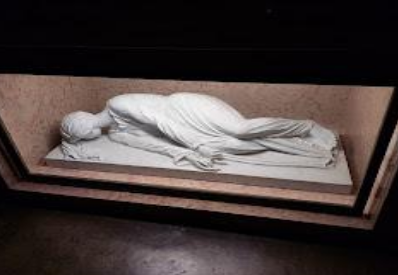

Franciscan Monastery of the Holy Land in America (NE Wash., DC)


Patsy, Taylor, and I visited the Franciscan Monastery last weekend and were pleasantly surprised to the extent they re-created sites from the Holy Land and even the catacombs from Rome. I would highly recommend a visit.
This past Sunday (Dec 31) was Holy Family Sunday, Luke 2:22-40

It was the story of the presentation of Jesus at the Temple when Simeon and the prophetess Anna recognized immediately who the baby Jesus was. We are not going to delve into this reading, but I wanted only to point out two things that you may not have heard in your Sunday homilies.
The first is St. Joseph. We think Mary doesn’t have a lot of lines in the New Testament, but Joseph has none. Not one word is spoken in Scripture. We know he is a good and righteous man, and a religious man. We know he is open to God because he listens to the angel in his dream to take Mary as his wife after he finds out she is pregnant. He listens to the angel in his dream when he is told take his family to Egypt to escape the murderous plans of King Herod, and again when Herod died and it was time to return to Israel. These three defining dreams remind us of another famous Joseph 1700 years earlier.
Joseph (Jesus’ human father) may not have been much for words, but what about his actions? He was only asked to protect the two most important people in the history of the world, that’s all! And he did it without a word. This is why he is the patron saint of families, fathers, expectant mothers, travelers, craftsmen, engineers, and working people. God bless St. Joseph!
The second is the Trinitarian association with family. Part of the mystery of the Incarnation is the fact that God not only became man, but He joined Himself to a human family. Participating in the human family reveals that God desires His human creatures—His image-bearers—to play key roles in redemptive history, starting with the family. We rarely ponder how incredible this is.
Think about it: the Holy Trinity entrusted two humans with the incredible role of raising one of its "members" – astonishing. The whole world could not contain God, yet He placed Himself in the hands of a human mother and father. Reflecting on the nature of the Holy Trinity, we begin to see that the human family can teach us about Trinity, which is a loving, self-giving unity of Persons. The family sets the stage for love to begin its journey, first moving love outside of the self to the other family members, then out to our neighbors, and then to the ends of the earth. This is what the Trinity does and what we are called to do!
Therefore, it is not merely the individual man and woman who bear the image of God, but the human family itself that bears the image of the Trinity. It was for this reason that Pope Benedict XVI called the human family an icon of the Holy Trinity.

January 1 – The Solemnity of Mary, Mother of God

2nd Reading, Paul to the Galatians 4:4-7
Brothers and sisters:
When the fullness of time had come, God sent his Son, born of a woman, born under the law, to ransom (redeem) those under the law, so that we might receive adoption as His very own children. And because you are His children, God sent the Spirit of his Son into our hearts, so that we, too, cry out,
“Abba, Father!”So you are no longer a slave but a child, and if a child then also an heir, through God.
Q: Meaning of “When the fullness of time had come”?
A catechism quote: The fullness of time is “that which is determined by God as the right and proper time when the whole course of previous preparation both for Jews and Gentiles were complete. Here we have a very clear expression that our religion is a progression in time, divided into periods, and finding its culmination in Christianity.” The phrase "fullness of the time" therefore always refers to the "the proper time appointed of God the Father."
Q: Paul makes the point of saying God’s son was “born of a woman.” What is the point he is making?
Some people thought maybe Jesus was just divine. Paul makes it clear that Jesus was also human, not just divine.
Q: Paul says God’s son was “born under the law.” This refers to what?
The Mosaic laws were in effect and binding on all Jews.

Q: Paul says we are no longer “slaves”? Slaves to whom? To what?
Slaves to the law.
Paul referred to the Jews being under the Law as being enslaved, because even though the Jews had been given the law, they could not keep it. This was the reason three sacrifices a day were offered at the Temple – for continual forgiveness – and these sacrifices had to be repeated. Additionally, the sacrifices were not enough because the sacrifice of an animal didn’t really equate to justice for man’s grievous sins. Therefore, the sacrifices were continuous, especially on the holy days.
Paul sees this problem as unfixable, until the promised Messiah came and “somehow” solved it. This “somehow” got answered when the Messiah turned out to be God also!
Gospel Reading: The Solemnity of Mary, Mother of God
The Shepherds and the Angels, Luke 2:16-21

Luke 2:16-21
When the angels departed, the shepherds went in haste to Bethlehem and found Mary and Joseph, and the infant lying in the manger. When they saw this, they made known the message that had been told them about this child. All who heard it were amazed by what had been told them by the shepherds.
And Mary kept all these things, reflecting on them in her heart.
Then the shepherds returned, glorifying and praising God for all they had heard and seen, just as it had been told to them.
When eight days were completed for his circumcision, he was named Jesus, the name given him by the angel before he was conceived.
Q: Why this reading?
At first, we may wonder why this reading was chosen for “Mary, Mother of God.” One would think they might have chosen the Annunciation by the Angel Gabriel or even the Visitation to Elizabeth since Elizabeth says, “How is it that the mother of my LORD has come to me?” (Luke 1:43)
One reason has to do with it being the 8th day of the Christmas Octave? What else happened on the eighth day?
It was the day of circumcision. Circumcision was a very important day when one officially became a member of God’s chosen people. This leads to the second reason, which is that one didn’t receive their name until this day. Jesus received his name on this day, and the name Jesus means, “God saves.” Who Mary is – mother of God – is defined by who Jesus is.
Q: We know that Christ elevated everything that was prefigured in the OT. What did circumcision prefigure? What was it replaced by?
Baptism. It is now Baptism that gives one membership into the family of God.
Let’s return to the beginning of the reading.
The Shepherd’s message…
“Be not afraid, for behold, I bring you good news of great joy which will come to all the people; for to you is born this day in the city of David a Savior, who is Christ the LORD…. you will find a baby wrapped in swaddling clothes lying in a manger. And suddenly there was a multitude of the heavenly host praising God and saying, Glory to God in the highest, and on earth peace among men with whom he is pleased!”
The word for LORD is Kyrios, which is the word used for God. We are used to it but this message is astounding because not only has the Messiah has finally come, but that the Messiah is divine, he is the LORD.
The second key point is that the first humans to receive this message from the Heavenly host were lower class shepherds. God’s example of humility doesn’t miss a beat from the first moment on.
2. And Mary kept all these things, reflecting on them in her heart. Elsewhere in Scripture it also says Mary pondered these things in her heart.
The Greek word for reflecting is “storing up,” or “treasuring up.” The Greek word used for pondering is sumballo, which means turn over in one’s mind, or to piece together, like a puzzle. Mary is clearly deeply contemplating what is happening. Remember, the Angel Gabriel didn’t give her a lot of information: He will be the Savior of the World, and his name will be Jesus – that’s it. What will Jesus do exactly, and when? What is she and Joseph supposed to do differently? She has no idea what to do or expect next.
What’s interesting is that Luke is talking about what’s happening inside Mary’s head! Where does he get this information? Luke was not one of the Twelve, but joined them after Jesus’ passion, mainly following Paul (he also authored the Book of Acts).
Our first clue is at the very beginning of Luke’s Gospel, where he says he is reporting events received from “eyewitnesses from the beginning” (Lk 1:2). Only Mary would give that kind of eyewitness account! Did Luke have access to Mary?
Q: What does tradition tell us about where John took Mary after Jesus died?
Ephesus. As it turns out, in Acts 18-19, Luke spends three years in Ephesus with Paul. So, Luke would have lots of time with Mary, which is how he would have gotten his narratives on the Annunciation, the Visitation to Elizabeth, and the infancy narrative in his first two chapters.

Q: Why do we call Mary our Mother, even though she is not our biological mother?
Since Mary gave birth to Jesus, who is the Head of the Mystical Body of Christ, and we are all members of His Body, she therefore brought us spiritually into being as children of God.
Also consider that Eve received her name because it meant, “mother of all the living.” Since Mary is the “new Eve,” she is, in the same sense, the mother of all the saved, of all Christians, of the Church.
Fulton Sheen said Mary is not divine, but rather like the moon, for her light is always the reflection of her Son’s divine light.
Quote of the Day:
"Mary is the noblest gem in Christianity after Christ. She is wisdom and holiness personified. We can never honor Mary enough." - Martin Luther, the great reformer of the Protestant Reformation
The Epiphany of Our Lord – Reading for Sun, Jan 7: Mt 2:1-12
When Jesus was born in Bethlehem of Judea, in the days of King Herod, behold, magi from the east arrived in Jerusalem, saying, “Where is he who has been born king of the Jews? For we have seen his star in the East and have come to do him homage.”
When King Herod heard this, he was greatly troubled, and all Jerusalem with him. Assembling all the chief priests and the scribes of the people, He inquired of them where the Christ was to be born.
They said to him, “In Bethlehem of Judea, for thus it has been written through the prophet: And you, Bethlehem, land of Judah, are by no means least among the rulers of Judah; since from you shall come a ruler, who is to shepherd my people Israel.”
Then Herod called the magi secretly and ascertained from them the time of the star’s appearance. He sent them to Bethlehem and said, “Go and search diligently for the child. When you have found him, bring me word, that I too may go and do him homage.”
After their audience with the king, they set out. And behold, the star that they had seen at its rising preceded them, until it came and stopped over the place where the child was. They were overjoyed at seeing the star, and on entering the house they saw the child with Mary, his mother. They prostrated themselves and did him homage. Then they opened their treasures and offered him gifts of gold, frankincense, and myrrh.
And, having been warned in a dream not to return to Herod, they departed for their country by another way.
Q: What is “epiphany?
A Sudden Appearance B. Manifestation C. Realization D. Revelation E. All of these
The Christian Epiphany refers to celebration of the revelation of a Divine Messiah, not only to the Jews but to the gentiles in the persons of the Magi.

A painting celebrating the moment when the angels announced not only the birth of the Messiah but of the LORD himself to the shepherds out in the fields. Now, it may not have looked exactly like this, but who knows?
Context of the Gospel reading for The Epiphany of Our Lord.
The Epiphany reading from Matthew is the exact same each year. It is about the Magi from the East following the “star,” then meeting with King Herod, finding Jesus in Bethlehem, and finally not returning to Herod as promised (another way home).
Key players:
Messiah (Greek for Christ; means “anointed one.”). There was a heightened expectation in the first century BC that the coming of the Messiah was close, not only among the Jews but also among the gentiles (“A Judean King was to rise up…”). This by itself would have put Herod on edge.
King Herod. Herod was a “client king” (puppet king) of Rome. As far as the Jewish people were concerned, he was not a valid king. He not only wasn’t from the tribe of Judah; he wasn’t even one the 12 Tribes. He was Edomite, a descendent of Esau. In spite of this, Herod tried to win over the Jews with immense building projects throughout Israel, including major expansions to the Temple. Nevertheless, he was paranoid and crazy, killing his wife and several of his children whom he thought were a threat to his kingship. One can only imagine what he thought when the Magi showed up in Jerusalem asking about the birth of new Jewish King.
The Star. It was a common ancient belief that a new star appeared at the time of a ruler’s birth. Matthew furthermore draws upon the Old Testament story of Balaam, who had prophesied that a star shall advance from family of Jacob.
“I see him, though not now; I observe him, though not near: A star shall advance from Jacob, and a scepter shall rise from Israel.” (Numbers 24:17)
Though there have been numerous efforts to correlate this star to historical astral phenomena, many of the early Church fathers simply assumed it was a supernatural, not natural, event. Have you ever tried to follow a star, let alone to someone’s house? On the other hand, in ancient Judaism, stars were often considered to be angels.
The Magi. The “Wise Men from the East” would have been high level advisors of a royal court. Usually from the wealthy class, they were experts in the sciences and religion. “From the east” could mean anywhere from Nabataea 100 miles away to Persia 1000 miles away.
The meaning of their coming: Like the message to the shepherds made clear that worldly wealth and position were not important to God, the message of the Magi was that the OT was over, the Jews had finished preparing the way, and God was now coming for all humanity.

Matthew 2:1-12
When Jesus was born in Bethlehem of Judea, in the days of King Herod, behold, magi from the east arrived in Jerusalem, saying, "Where is he who has been born king of the Jews? We saw his star at its rising in the East and have come to do him homage."
When King Herod heard this, he was greatly troubled, and all Jerusalem with him.
Assembling all the chief priests and the scribes of the people, he inquired of them where the Christ was to be born.
They said to him, "In Bethlehem of Judea, for thus it has been written through the prophet:
And you, Bethlehem, land of Judah, are by no means least among the rulers of Judah; since from you shall come a ruler, who is to shepherd my people Israel." (Micah 5:2)
Herod called the Magi secretly and ascertained from them the time of the star's appearance. He sent them to
Bethlehem and said, "Go and search diligently for the child. When you have found him, bring me word, that I too may go and do him homage."
After their audience with the king, they set out. And behold, the star that they had seen at its rising preceded them, until it came and stopped over the place where the child was. They were overjoyed at seeing the star, and on entering the house they saw the child with Mary, his mother. They prostrated themselves and did him homage.
Then they opened their treasures and offered him gifts of gold, frankincense, and myrrh.
And having been warned in a dream not to return to Herod, they departed for their country by another way.
Q: Why was Bethlehem important besides being Joseph’s hometown?
It was the home of King David, from whom the Messiah was promised. B. It was the town prophesied in Micah 5:2.
C. It was the most convenient town (five miles from Jerusalem). D. They served great lamb dishes.
Answer A&B
Q: Was there a connection between King Herod and Pharaoh in Exodus?
Yes. Herod’s consultation with the chief priests and scribes is prefigured by the Jewish tradition about the child Moses in which the “sacred scribes” warn Pharaoh about the imminent birth of one who will deliver Israel from Egypt and, thus, Pharaoh makes plans to destroy him. Herod follows the same script. Exodus is prefigured all throughout Jesus’ ministry.

The Magi Meet with King Herod
Note Herod with the sword as he contemplates the threat of the Messiah.
Herod is also listening to Satan, the black creature whispering in his ear.

Q: What is meant by the Magi prostrating themselves?
Prostrating in this way not uncommon in pagan times, but generally reserved for deities.
Q: What did the gifts from the Magi mean?
Although the Bible does not explain it, theologians have discerned the following:
Gold Kingship Kingly Messiah
Frankincense Divinity Priestly Messiah
Myrrh (oil) Death Suffering Messiah
Others say they represent that Jesus was “Priest, King, & Prophet,” which could also be valid (prophets are anointed with oil.)
Consider this prophecy from Isaiah 60:
Arise, shine, for your light has come, and the glory of the LORD rises upon you. See, darkness covers the earth and thick darkness is over the peoples, but the LORD rises upon you and his glory appears over you. Nations shall walk by your light, and kings by your shining radiance. Caravans of camels shall fill you, dromedaries from Midian, Ephah, and Sheba shall come bearing gold and frankincense and proclaiming the praises of the LORD.
Conclusion:
I don’t think the Magi traveling to Jerusalem at first was a mistake. Jerusalem was supposed to be the recipient of the prophecies. It was their prophecy, their Messiah. The Magi must have been surprised to catch Jerusalem unprepared. However, Jerusalem had to be given the chance to receive their long-awaited Messiah; or not.
So, off to Bethlehem they went. Now the Magi pagan gentiles will be added to the contingent of lowly shepherds as the new beginning of God’s people.
On the Magi returning home by another way rather, the Venerable Fulton Sheen once said:
“Of course, they went back another way; for no one comes to Christ and goes back the same way he came!
The star that led the Magi was not just a fancy GPS; it was the light for humanity. The light God promised that shines in the darkness. What darkness, you ask? Look around, but remember, darkness is true in every age. However, Jesus reminds us:
I tell you these things so that in me you may have peace. In this world, you will have many tribulations, but take heart, for I have overcome the world. – John 16:33
Closing Prayer
5200
Hail Holy Queen
Hail, holy Queen, mother of mercy, our life, our sweetness, and our hope.
To thee do we cry, poor banished children of Eve; to thee do we send up our
sighs, mourning and weeping in this valley of tears.
Turn then, most gracious advocate, thine eyes of mercy toward us;
and, after this, our exile, show unto us the blessed fruit of thy womb, Jesus.
O clement, O loving, O sweet Virgin Mary.
Pray for us O holy mother of God,
that we may be made worthy of the promises of Christ.


Comments