06.23.26 - Cost of Discipleship & Mass Explained
- tmaley
- Jun 26
- 15 min read
Understanding & Biblical Defense Class 6/16/26
Every Tuesday, 7PM-8PM (EST), 🖥️Zoom ID: 861 1782 2081 🗝️Passcode: 406952
Join to receive notifications and study notes on Meetup: www.meetup.com/catholicbiblestudy
Past classes are posted on our Catholic Catacombs Website: www.CatholicCatacombs.org
House Rules and Catholic Resources…
1. RSVP Reminder: Please RSVP whether you are attending the meeting or just reading the Recaps afterwards. The more RSVPs, the more Meetup will give exposure to “Catholic Bible Study” – a good thing!
2. Questions. We encourage questions although we ask that you keep them on topic and brief. You can ask during the meeting, or in the chat box, or if you prefer you can email us through Meetup.com, or Ron directly: ron@hallagan.net.
3. Respectfulness. We will be discussing differences between Christian denominations and religions in general, and we seek to be respectful at all times. Protestants especially are our friends and brothers/sisters-in-Christ; in fact, I owe much of my return to Christianity to them. Therefore, any critique of our brethren is in loving pursuit of apostolic truth.
4. No politics. It would be easy for us to self-destruct, but that’s not our goal :). Our goal is to learn, understand, and apply the Bible and our faith to our everyday lives.
5. Word on Fire. Bishop Robert Barron has reached millions through his 10 min Sunday homilies, podcasts, educational series and certifications, bibles, and other lectures and apologetics. www.wordonfire.org
6. Hallow App. Daily prayers and reflections, especially for the high holyday seasons. www.alex@mail.hallow.com
7. Catholic Answers – www.catholic.com. This is the best group/source for Catholic Apologetics on the planet.
8. Dynamic Catholic. Interested in daily inspirations to grow closer to God and the Church, not to speak of the many educational resources? Sign up for Matthew Kelly’s powerful insights, quotes, and reflections at www.dynamiccatholic.com.
9. “The Chosen” TV series. All of us seek a relationship with Jesus Christ, which is not always easy. It can help if we have seen and heard Him. The Chosen series captures Jesus better than any show I have ever seen. Highly recommended.
10.Cursillo. Interested in meeting with other men or women weekly over coffee to discuss God in your personal and professional life? Join Cursillo (cur-see-yo). Contact Jennifer Pence (Jennifer.pence@gmail.com) for more information.
11. Online- Catholic Prayer & Fellowship. Are you interested in praying the rosary, etc. with other Catholics during the week? Follow fellow member Jason Goldberg. Link: https://www.meetup.com/online-catholic-prayer-and-fellowship/
Bible Study Format


Each meeting is (roughly) as follows:
15 min Apologetic Reflection
15 min Upcoming Gospel Reading
30 min Weekly topic/theme
1 hour
Week 1: Gospel Week – we study several Gospel stories, especially the tough ones.
Week 2: Bible Week – we are working our way through the Bible. We are studying the New Testament.
Week 3: Questions and Survey Topics chosen by Members:
1. Prison Ministry Stories 2. Plenary Indulgences 3. Explanation of the Mass and Eucharist 4. Dead Sea Scrolls 5. Catholicism vs modern cosmology? 6. The 7 Gifts/Fruits of the HS, 7 Deadly Sins 7. How to experience the Love of God 8. The Communion of Saints 9. Comparative Religions 10. Catholic vs Protestant beliefs
Week 4: Apologetics:
1. Gen 1-3 (Creation Story, Adam & Eve, the Fall of Man, The Meaning of Eve/the Trees/Summary
2. Faith vs Doubt – does having doubts make us bad Christians?
· Don’t forget to RSVP.
· Taylor will send a link to everyone with today’s notes.
· The class is recorded if you want to listen to it anytime.
· I will occasionally ask for volunteer readers…
Opening Prayer
Lord, in your great generosity, heal all our weaknesses so we may serve you all the better.
May we receive the Bread of angels, the King of kings and Lord of lords, with the purity and faith …
Nourishment and grace that will bring us to salvation.
As Jesus taught us to pray… together
Our Father Who art in Heaven, Hallowed be Thy Name.
Thy Kingdom come, Thy Will be done, on earth as it is in Heaven.
Give us this day our daily Bread;
And forgive us our trespasses as we forgive those who trespass against us.
And lead us not into temptation but deliver us from evil. Amen.
Major holy days: Saints Peter & Paul (June 29)
The Assumption of Mary (August 15)
www.masstimes.org Mass or Confession anywhere/anytime in the world!
TODAY:
· Reflection: The Age of the Holy Spirit - IV
· Reading for 13th Sunday in Ord Time (6/28), The Cost of Discipleship, Matthew 10:37-42
· Member Topic: The Mass Explained Part III/IV – The Liturgy of the Eucharist, continued
Apologetic of the Week: What is a Paradox?
Paradox is a seeming contradiction that startlingly turns out to be true. Chesterton called the paradox, “Truth standing on its head to attract attention.”
The ancient Greeks were well aware that a paradox – i.e., the saying “less is more” – can take us outside our usual way of thinking. And so that is the origin of the word: para = beyond/outside of + dokein – to think.
Jesus teaches us that God’s reality stands in paradox to the world’s reality. For example, in this life the more we give something away, the less we have – it’s basic physics. However, in the spiritual reality, which is our higher nature, it is the opposite. Example: Love. The more you give love away, the more love you have; and the more you try to conserve love or hold onto it for yourself, the less you have. The same spiritual laws apply to compassion, friendship, truth, and goodness. They are not ours to hoard; they are given to us to give away. And if we do, we will never run out. A great paradox.
Reflection III – Age of the Holy Spirit

Professor of Theology (Creighton University) and respected author Fr. Richard Hauser (1937–2018) focused much of his teaching and writing on the Holy Spirit. First, he saw that the role and indwelling of the Spirit leads to union and love:
“This love has as its object God, as well as other people. Christian theological tradition has most often seen the Holy Spirit in the Trinity as the bond of love between the Father and the Son. The primary effect of the Spirit acting in people, then, will be love, both for one another and for God.”
Second, God’s Spirit joins our spirit; it does not replace it. Therefore, the good acts we perform are truly our acts, not simply acts of the Holy Spirit in us. In this process, “who” we are is spiritually evolving. We are like God’s apprentices.
Third, THE REAL US. We have a higher (spiritual) and lower (physical) nature. The deepest part of the self is the spiritual nature. From the center of the spiritual realm flows all our freedom and love; at this level we remain free to choose to move or not to move with the Spirit. The Holy Spirit is active in us at all times drawing us toward greater love and service of God and others, but the Spirit does not control our response. That flows from our freedom (free will).
Fourth, the Spirit’s work is helping us stay in relationship and building connection (UNITY). The Spirit warms, softens, mends, and renews all the broken, cold places in and between things. Invisible but powerful, willing to be anonymous, the Spirit does not care who gets the credit for love and unity.
Fifth, because of our relationship with God, we become co-creators in the universe God created – and is still creating. Imagine the characters in a painting being invited to participate in the life – and completion – of the painting. That is us. However, with this power comes not only the power to create but also to destroy. On the one side, when we love, when we unify, when we build-up, when we sacrifice ourselves for the sake of the other, we add to God’s ongoing Creation. When we divide, or tear down, or make everything about ourselves, we subtract from Creation.
In this journey of ours, the Holy Spirit is given to us to help. The titles given him over biblical history say it all: He is our Advocate, Counselor, Advisor, Teacher, Supporter, Intercessor, Comforter, and Protector. Which more could we ask for?
The Cost of Discipleship, Matthew 10:37-42

Context
Last week, I mentioned that there are five main dialogues in the Gospel of Matthew. We are in the second dialogue – “The Missionary Discourse” – which concludes with today’s reading. In the previous passage, Jesus told the disciples not to fear those who can kill the body but not the soul, meaning our eternal life is far more important to preserve. This lifetime is but a tick on the eternal clock of our whole lifespan.
In this entire Missionary Discourse, it is worth noting again that Jesus is only talking with his 12 Apostles – not the usual, large crowds. Now he is going to explain to the Apostles the ultimate cost of this mission they are on – the cost of their lives. He wants them to know what this commitment means up front, and he minces no words!
The Cost of Discipleship
Matthew 10:37-42
Jesus said to his apostles: “Whoever loves father or mother more than me is not worthy of me, and whoever loves son or daughter more than me is not worthy of me; and whoever does not take up his cross and follow after me is not worthy of me.
Whoever finds his life will lose it, and whoever loses his life for my sake will find it."
"Whoever receives you receives me, and whoever receives me receives the one who sent me.
Whoever receives a prophet because he is a prophet will receive a prophet’s reward, and whoever receives a righteous man because he is a righteous man will receive a righteous man’s reward.
And whoever gives only a cup of cold water to one of these little ones to drink because the little one is a disciple – amen, I say to you, he will surely not lose his reward.”

Matthew 10:37-42
Exegesis (Study/Interpretation/Explanation)
Jesus said to his apostles: “Whoever loves father or mother more than me is not worthy of me, and whoever loves son or daughter more than me is not worthy of me…”
There are two explanations to understanding Jesus’ comments.
First, we should be aware that Jesus’ statements would have caused quite a shock to his audience because the Fourth Commandment says to honor one’s parents. It’s the highest commandment after the commandments to love God (1-3).
There is only one being in existence who could demand love from us ahead of our parents and family. Who?
God. And so this is the first point. Only God could make such a claim on our love, and indeed that’s who is making the claim. Here Jesus is identifying himself.
Second, some of us may wonder how we can be expected to put love of parents and children second to anyone, even God, whom we have never seen. We might understand it intellectually, but what about what our heart tells us?
How can we better understand this?
The highest love that humans can give or desire is Agape Love, which is willful, unconditional, and sacrificial, like God’s love for us. But this kind of love doesn’t come from us, or else we wouldn’t have to seek it. It comes from God, who is that love. We are aware of it because of our spiritual natures. Again, the paradox of love is that the more we give it away, the more we have to give. Since God is the source of this love, would we not put the source of that love (God) first? It is this endless love we want to give to our families.
“…and whoever does not take up his cross and follow after me is not worthy of me.”
Consider that the cross hadn’t happened yet to Jesus. Nobody knew anything about his future death on the cross.
What would this “cross” comment have meant to his audience?
This Roman form of cruel punishment was intentionally shocking and made into a public spectacle as a threat to everyone in Roman-occupied countries: Don’t misbehave and pay your taxes, or else!
Jesus’ statement is a continuation of his previous messages – love of God must come before love of family; now he adds their lives to the equation. The worst thing a leader can do is sugarcoat the task at hand. The cross represents the threat to their bodily lives, and so if they are having any second thoughts about following him, this is the time to turn back. Of course, the alternative is that they are following God, the long-awaited Messiah, and the path to eternal glory. Clearly, this ultimate goal was truth enough for them, for only one of the twelve ultimately turns back.

“Truth standing on its head to attract attention.” – GK Chesterton
“Whoever finds his life will lose it, and whoever loses his life for my sake will find it."
Another paradox! The person who finds his life in this world is someone who treasures this life above all. In this case, they will lose the life that Christ came to give us. This lifetime compared to Heaven is like one minute compared to your entire lifetime.
On the other hand, if we are willing to lose this life – or put this life second to following Christ – we will discover and possess the life that Jesus purchased for us. As Jesus says in Matthew, “Seek first the Kingdom of God and His righteousness, and all these other things will be added to you.” (Mt.6:33)
“Whoever receives you receives me, and whoever receives me receives the one who sent me.”
What is Jesus’ message here?
Jesus is telling his disciples that when other people receive them, they are receiving Jesus Christ; and if they receive Jesus Christ, then they are receiving God the Father.
That’s quite a message, but it also has another level of meaning. When we say the priest or bishop is standing in for Jesus when giving out the sacraments, it refers to this: “Whoever receives you, receives me.” That is why it is Jesus Christ who gives the sacraments, not the priest.
“Whoever receives a prophet because he is a prophet will receive a prophet’s reward, and whoever receives a righteous man because he is a righteous man will receive a righteous man’s reward. And whoever gives only a cup of cold water to one of these little ones to drink because the little one is a disciple – amen, I say to you, he will surely not lose his reward.”
This phrase emphasizes the importance of recognizing and honoring those who speak on behalf of God. They don’t work for a living, they work for our salvation, so we are encouraged to offer hospitality whenever we can. “Little ones” does not refer to small people but small according to world stature – the lower level priests, deacons, and volunteers. Often, their friendships are limited because of they are busy helping others, and little offer of hospitality goes a long way. In the Old Testament, prophets like Elijah and Elisha were often received with hospitality, which brought blessings to their hosts (1 Kings 17:8-24; 2 Kings 4:8-37). The act of receiving a prophet is an acknowledgment of God's authority and message.
Taylor and Santi were just telling me how they had their local priest over for dinner recently. According to Jesus, then, Taylor and Santi will be receiving a prophet’s reward!

The Catholic Mass Explained - Part IV
Sources: “The Mass Explained” (Dr. Brant Petri), “Catholic Mass 101” (Fr. Mike Schmitz), “Rediscover Catholicism” (Matt Kelly)
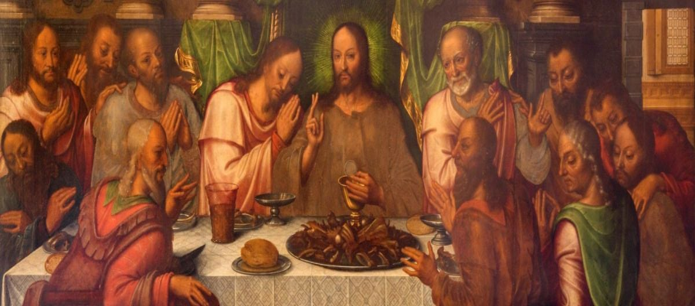
The Catholic Mass is the Last Supper, the New Passover Meal
The Mass can be defined into FOUR parts:
Part I. Introductory Rites: Entrance, Procession, Penitential Rite, Gloria, Opening Prayer
Part II. Liturgy of the Word: Scripture Readings, The Homily, The Profession of Faith, General Intercessions
Part III. Liturgy of the Eucharist: Offertory, Eucharistic Prayer, Consecration, Lord’s Prayer, Sign of Peace, Communion
Part IV. Closing Rites: Final Blessing, The Dismissal
We covered Part I on April 21, Part II on May 19, and we will cover Part III tonight.
Part III. Liturgy of the Eucharist:
A. Offertory (Presentation of Gifts, Collection)
B. Eucharistic Prayer
C. Consecration
D. Lord’s Prayer
E. Sign of Peace
F. Communion
Eucharistic Prayers. There are four Eucharistic Prayers the priest may read from and they are usually contained in your missalettes/booklets. It may be useful to read along with the priest (I need to because of my poor hearing) as the words are biblical, historical, and meaningful.

What is the central part of the Eucharistic Prayer called when the Consecration takes place?
The Epiclesis. It is from ancient Greek, meaning “invocation” or “calling upon.”
Who is the priest calling upon?
The priest is calling upon God the Father to send the Holy Spirit to consecrate the bread and wine. You can see that the Epiclesis is a Trinitarian event, like Jesus’ Baptism and Transfiguration.
What does the Holy Spirit coming down to transform the bread and wine into Jesus remind you of?
The Incarnation. Jesus saying, “This is my body/blood!” – what else could these words mean?
The priest takes the bread, then the wine and says the words that Jesus used at the Last Supper. It is at this time that merely ordinary bread and wine become extraordinary (supersubstantial).
Take this, all of you, and eat of it, for this is my Body, which will be given up for you.
Take this, all of you, and drink from it, for this is the chalice of my Blood, the Blood of the new and eternal covenant, which will be poured out for you and for many, for the forgiveness of sins.
Do this in remembrance of me.
Often there is a bell that rings after each of these, which is to announce that a miracle has just happened.
“Do this in remembrance of me” takes a bit of exegesis. This phrase comes from the Greek anamnesis, which means to “re-present” or “to make present again.” So anamnesis is not only remembering, it is re-living the experience again. Think of a couple who renews their marriage vows. They aren’t just remembering when they got married the first time, they are reenacting the real thing. The renewal is as real as it was the first time. This is what Jesus means.

The Church Fathers have also said another way to think about this is that when the priest holds the bread and wine up and it is transformed, it becomes like a two-way mirror, and on the other side is Heaven. The Eucharist – and all it represents – was instituted by Christ as our portal and doorway to Heaven.
What is the significance of blood in the Old Testament that connects us to the blood of Jesus at the Last Supper?
Blood represents life (and still does today!). In ancient sacrificial systems –life” as death such as the lamb’s blood the Israelites were instructed to put on their doorposts the night of the first Passover – the blood represented “saving live” as death passed over their homes. The life of the animal was said to pass on to the Israelites and give them another chance once their sins were forgiven. But the life of mere animal’s blood is finite/limited, so the Jews had to make sacrifices at the Temple every day. Similarly, Jesus’ blood passes new life to us but His blood – His life – is unlimited and eternal, which is why there only needed to be one sacrifice for all time.
Apologetic: Non-Catholics have at times questioned whether Catholics invented this “transubstantiation miracle” at Mass centuries after Christ, but those that say this don’t know their history. If we start with the Apostles themselves, you can begin with the words they recorded of the Last Supper in Matthew 26:26, Mark 14:22, and Luke 22:19. In John 6:47-69, Jesus talks in incredible detail about the communion of eating his body and blood. Fifteen years later, Paul writes about it in 1 Cor 11:23-27. Then there’s the 2nd Bishop of Antioch, St. Ignatius, who was selected by the Apostle Peter and trained by the Apostle John. St. Ignatius said in AD 110:
“I have no taste for corruptible food nor for the pleasures of this life. I only desire the bread of God, which is the flesh of Jesus Christ, who was of the seed of David; and for drink I desire his blood, which is love incorruptible” (St. Ignatius, Letter to the Romans 7:3, AD 110).
This evidence abounds with all the Early Fathers of the Church. In the 5th century, St. Augustine famously stated as he held Christ in his hands, “What you see is the bread and the chalice... But what your faith obliges you to accept is that the bread is the body of Christ, and the chalice is the blood of Christ."
You find the same thing with all the Popes and saints throughout Christian history.
Even more amazing, Martin Luther, the father of Protestantism (16th century AD), held this belief, firmly defending the literal bodily presence of Christ in the bread and wine and compared it to the Incarnation. It was his peers and successors who turned the bread and wine into a symbolic remembrance.
***
At the end of the Eucharistic prayers, we profess the complete “Mystery of Faith”:
“We proclaim your Death, O Lord, and profess your Resurrection, until you come again!”
Now comes the apex of the Mass, when the priest takes the Body and Blood of Christ and holds it up – he is offering the sacrifice up to the Father, reminiscent of when Jesus offered his Spirit up to the Father on the cross. The priest then concludes with:
“Through Him, with Him, and in Him, O God Almighty Father, in the unity of the Holy Spirit, all glory and honor is Yours, forever and ever.”
The Great Amen. We may just think this is a typical Amen but it’s called the Great Amen because it is our confirmation of everything that has transpired since the Eucharistic prayers were begun.
Next: The Lord’s Prayer, Sign of Peace, Communion

Closing Prayer
A Communion Prayer
Thank you, O Lord, for my existence so that I could have a relationship with You.
I did nothing to deserve it, yet it has become the foundation of my being.
Thank you for giving me the opportunity to know You, serve You, learn from You, and become closer to You.
Thank you for Your infinite kindness, forgiveness, and wisdom.
You are everything to me and all that I am, and all that I have, belongs to You.
“Maranatha – Come Lord Jesus, enter and make Your home in me!”


Comments