09.08.26 - The Unforgiving Servant and Wedding at Cana
Catholic Understanding & Biblical Defense Class 9/8/26
Every Tuesday, 7PM-8PM (EST), 🖥️Zoom ID: 861 1782 2081 🗝️Passcode: 406952
Join to receive notifications and study notes on Meetup: www.meetup.com/catholicbiblestudy
Past classes are posted on our Catholic Catacombs Website: www.CatholicCatacombs.org
House Rules and Catholic Resources…
1. RSVP Reminder: Please RSVP whether you are attending the meeting or just reading the Recaps afterwards. The more RSVPs, the more Meetup will give exposure to “Catholic Bible Study” – a good thing!
2. Questions. We encourage questions although we ask that you keep them on topic and brief. You can ask during the meeting, or in the chat box, or if you prefer you can email us through Meetup.com, or Ron directly: ron@hallagan.net.
3. Respectfulness. We will be discussing differences between Christian denominations and religions in general, and we seek to be respectful at all times. Protestants especially are our friends and brothers/sisters-in-Christ; in fact, I owe much of my return to Christianity to them. Therefore, any critique of our brethren is in loving pursuit of apostolic truth.
4. No politics. It would be easy for us to self-destruct, but that’s not our goal :). Our goal is to learn, understand, and apply the Bible and our faith to our everyday lives.
5. Word on Fire. Bishop Robert Barron has reached millions through his 10 min Sunday homilies, podcasts, educational series and certifications, bibles, and other lectures and apologetics. www.wordonfire.org
6. Hallow App. Daily prayers and reflections, especially for the high holyday seasons. www.alex@mail.hallow.com
7. Catholic Answers – www.catholic.com. This is the best group/source for Catholic Apologetics on the planet.
8. Dynamic Catholic. Interested in daily inspirations to grow closer to God and the Church, not to speak of the many educational resources? Sign up for Matthew Kelly’s powerful insights, quotes, and reflections at www.dynamiccatholic.com.
9. “The Chosen” TV series. All of us seek a relationship with Jesus Christ, which is not always easy. It can help if we have seen and heard Him. The Chosen series captures Jesus better than any show I have ever seen. Highly recommended.
10.Cursillo. Interested in meeting with other men or women weekly over coffee to discuss God in your personal and professional life? Join Cursillo (cur-see-yo). Contact Jennifer Pence (Jennifer.pence@gmail.com) for more information.
11. Online- Catholic Prayer & Fellowship. Are you interested in praying the rosary, etc. with other Catholics during the week? Follow fellow member Jason Goldberg. Link: https://www.meetup.com/online-catholic-prayer-and-fellowship/
Bible Study Format
Our Bible Study is a combination of Exegesis and Apologetics.


Each meeting is (roughly) as follows:
15 min Apologetic Reflection
15 min Upcoming Gospel Reading
30 min Weekly topic/theme
1 hour
Week 1: Gospel Week – we study several Gospel stories, especially the tough ones.
Week 2: Bible Week – we are working our way through the Bible. We are studying the New Testament.
Weeks 3 & 4: Survey Topics chosen by Members (explanations of our faith & apologetics):
1. Prison Ministry Stories 2. Plenary Indulgences 3. Gen 1-3 (Creation Story, Adam & Eve, the Fall of Man)
4. Faith vs Doubts – does having doubts make us bad Christians? 5. Explanation of the Mass & Eucharist
6. Dead Sea Scrolls 7. Catholicism vs Modern Cosmology vs Evolution 8. Gifts/Fruits of the HS, 7 Deadly Sins 9. How to experience the Love of God 10. The Communion of Saints 11. Comparative Religions
12. Catholic vs Protestant beliefs
· Don’t forget to RSVP.
· Taylor will send a link to everyone with today’s notes.
· The class is recorded if you want to listen to it anytime.
· I will occasionally ask for volunteer readers…
Opening Prayer:
O LORD
Thank you for your promise that where two or three of us are gathered in your name, You are there!
We ask for Your help to open our minds and hearts tonight so that Your Word breaks through and changes our lives.
And as you taught us to pray together…
Our Father
Who art in heaven, hallowed be your name.
Your kingdom come, your will be done, on Earth as it is in heaven.
Give us this day our daily bread,
And forgive us our trespasses as we forgive those who have trespassed against us.
And lead us not into temptation, but deliver us from evil. Amen!
Major holy days: All Saints Day (Nov 1)
Memorials – September: Mary’s Nativity-8, Archangels Michael, Gabriel, Raphael-29
www.masstimes.org: Mass or Confession anywhere/anytime in the world!
TODAY:
· Reflection: Forgiveness and Reconciliation
· Gospel Reading for 24th Sun in Ord Time (9/13), The Parable of the Unmerciful Servant, Mt 18:21-35
· Bible Timeline, New Testament – Wedding at Cana, Jesus announces the New Kingdom and New Jubilee
Quote of the Week:
“Anger can always find the weak spot in a man’s mind.” – GK Chesterton
Reflection: Forgiveness and Reconciliation:
Is there a difference between forgiveness and reconciliation?
Yes.
Forgiveness only takes one person. It is a personal decision to renounce resentment and revenge towards the offender, entrust judgment to God, and pray for their conversion. Christians are called to forgive in this way always.
Reconciliation takes two people. As the word suggests, it refers to the restoration of a relationship, which requires the cooperation of the offender/sinner. This actually requires both parties to do the hard work of reestablishing trust and changing behavior.
Forgiveness + Cooperation = Reconciliation.
Therefore, forgiveness is independent of reconciliation. We are asked to forgive always whether or not reconciliation occurs. Forgiveness is the personal decision to renounce resentment, pray for the other, and give all judgment to God.
Why must we pray for the offender?
Because the definition of love is “to will the good of the other,” even our opponents and enemies. You are praying for God to help heal and enlighten them, which is a good thing, right? Plus, it is a million times better spiritually than cursing them in the prison of your heart. It also leaves you in a better place should some form of reconciliation present itself, assuming it can be done safely and truthfully.
The Lord’s Prayer
Notice in the Our Father, when we pray for our own forgiveness we also pray that we will forgive others.
“Forgive us our trespasses as we forgive others who trespass against us.”
We are cooperating with God when we do both, in which case we will be forgiven and reconciled with God.
The Parable of the Unmerciful Servant, Mt 18:21-35

The Old Covenant Tabernacle
Context:
To understand this Gospel, we need to understand the Jewish theology of Jesus’ time. First-century Judaism was not simply a religion of rules. At its heart was a covenant: God had chosen Israel, delivered the people from slavery in Egypt, given them the Torah on Mt. Sinai, and promised to remain faithful to them. In this sense, “the Law” was seen as a gift – a way of living in relationship with God.
By the time of Jesus, however, the Jewish people had endured conquest, exile, foreign occupation, and much suffering. Many were asking: When will God restore Israel? When will the Kingdom of God finally come? Most expected a powerful Messiah who would defeat Israel’s enemies. Others emphasized strict obedience to the Law as the path to holiness. Still others withdrew from society, waiting for God to intervene.
Jesus entered directly into these hopes and tensions. He did not reject Judaism; he spoke from within it. He prayed the Psalms, celebrated Jewish feasts, quoted the Torah and the prophets, and affirmed the command to love God and neighbor. Yet he strongly challenged interpretations of religion that placed regulations above mercy.
Jesus proclaimed that the Kingdom of God was drawing near, although not through political revolution; rather, it was through repentance, healing, forgiveness, compassion, and reconciliation. He emphasized that holiness was not merely external observances but a transformation of our hearts.
This is why Jesus forgave sinners, ate with outcasts, healed those considered unclean, and told the Pharisees and Priests that the Sabbath was made for man, not man for the Sabbath. He revealed the deepest meaning of Israel’s faith: God desires mercy, justice, faithfulness, and love.
Last week, we read how Jesus explained to the apostles the process for reconciling people within the Church community. At the end of that passage, Peter said to Jesus, “Lord, how many times should I forgive a brother who sins against me? As many as seven times?”
No doubt, Peter thought he was erring on the high side – and in Jewish thought, seven times would be on the high side.
What was Jesus’ response?
Jesus said, “not 7, but 7x77,” which can be interpreted as endless. Remember, Jesus came to reconcile us to the Father and the “endless forgiveness” he teaches mirrors the endless grace and forgiveness we receive from the cross.
This conversation with Peter is the start of our Gospel reading today. Jesus follows it with a parable that will help us understand and remember how God views the meaning of forgiveness.


Matthew 18:21-35 – The Parable of the Unforgiving Servant
Peter approached Jesus and asked him, “Lord, if my brother sins against me, how often must I forgive? As many as seven times?”
Jesus answered, “I say to you, not seven times but seventy-seven times. That is why the kingdom of heaven may be likened to a king who wanted to settle accounts with his servants. As he began the settlements, a debtor was brought before him who owed then thousand talents. Since the man was unable to pay, the master ordered him to be sold, along with his wife, his children, and all his property, in payment of the debt. At that, the servant fell down, and bowing to him on his knees said, ‘Have patience with me, and I will repay everything.’
His master had compassion on him, forgave his debt, and released him.
But when that servant went out, he found one of his fellow servants who owed him a hundred denarii. He grabbed him and began to choke him, saying, ‘Pay back what you owe me!’ Falling to his knees, his fellow servant begged him, ‘Have patience with me, and I will repay you everything.’ But he refused. Instead, he had the fellow servant thrown into prison until he paid back the debt.
When his fellow servants saw what had happened, they were greatly distressed, and they went and recounted all of this to their master.
Then the master summoned him and said, ‘You wicked servant! I forgave all of your debt because you begged me. Shouldn’t you have had mercy on your fellow servant, as I had on you?’ In anger his master delivered him to the tormenters until he should repay all that he owed. .
Thus also my heavenly Father will do to you, unless each of you forgives your brother from your heart.”

Exegesis/Interpretation
Who is the servant/main debtor in the story? TayQuiz

Us/humanity.
Who is the master?
The Master is God.
What does the debt represent?
The debt represents our sins and the Master calling for the settlement of debts represents Judgment Day.
The main servant/debtor owes the Master 10,000 talents. How much is a talent?
A talent then would be 75-100 pounds of gold. Not ounces, pounds! Just 1 oz. of gold today is $4,400, so that would mean 75 pounds would be worth about $50 billion dollars, a number they probably couldn’t calculate back then. If this represents humanity’s sins on Judgment Day, then that means we are all in the same predicament as this guy.
The servant falls down and cries/begs and is inexplicably forgiven his debts. What does this forgiveness represent?
God’s mercy. Specifically, it represents Jesus offering his life on the cross for us. He paid off our debts.
In the next scene, this same servant runs into another servant who owes him money and he demands instant repayment from him. This other servant owed him 100 denarii.
How much is a denarius?TayQuiz

A denarius is one day’s wages – maybe $75-100 in today’s terms. A hundred denarii then would be about $10,000.
The first servant had just been forgiven $50 billion but he wouldn’t forgive the other guy $10,000? What does this travesty represent?
It’s an example of God forgiving our incalculable sins and then we refuse to forgive each other. This sounds so ridiculous we might think Jesus is speaking hyperbolically; but it’s really not that far off the mark. We can hold resentments for the smallest offenses, not to speak of large ones. Jesus is saying resentment are a form of judgment, and that’s not our job.
It is helpful to remember that forgiving others does not mean the other person is right or that we must agree with them or what they did. Forgiving is an internal, personal decision to renounce resentment and revenge towards the offender, entrust judgment to God, and pray for their conversion, healing, or enlightenment – or for our own understanding (because sometimes we are wrong). We are being told that resentment is like a disease; it’s like carrying a bagful of spiritual rocks around with us, or a self-imposed prison. You must give it to God and lighten your load. This is what Jesus means by “give me your burdens” (Mt 11:28).
The very heart of the matter is this:
The degree that another person might harm us is infinitely less than all the mistakes, poor judgments, selfishness, etc., that God is forgiving in us.
We must keep in mind that forgiveness from God is not something we can hold onto and possess for ourselves – if we do, we lose it. The forgiveness we receive remains valid only if we are willing to give it away. It is like spiritual energy that must flow through us to others. If the forgiveness stops with us, then it’s like shutting off the switch and the forgiveness stops/disappears.
This is exactly what the Lord’s Prayer tells us. “Forgive us our trespasses” is the beginning of our spiritual reconciliation as we ask this of the Father. But then notice the conditional second phrase: “as we forgive those who trespass against us.” This is not an option or a request; it is the spiritual requirement for it to remain in effect, lest we become just like the first servant in our story.
What is the key statement in the whole story?
Thus also my heavenly Father will do to you, unless each of you forgives your brother from your heart.”
In our fallen state, we always want to play God and decide who is forgiven and who isn’t. This is such fallen thinking that Jesus had to tell this story and end it super-emphatically to get everyone’s attention. If we don’t turn it over to God and pass on the forgiveness to others, we become the first servant. It is a choice we make; no one else’s.
Introduction to The New Testament
Welcome to the Good News of the New Testament.
How many books in the OT? TayQuiz

How many books in the NT? TayQuiz

Total in Bible: 46 + 27 = 73
As we move into the New Testament, we will not read all 27 books, but will continue the “Biblical Timeline Narrative,” which will primarily be the Gospel of Luke and the Acts of the Apostles, although other books will be referenced throughout. Much of today’s content was taken from the “Bible In A Year,” which does an excellent job at the Timeline Narrative.

The New Testament can be divided into two parts (I and II below).
Part I – The Gospels: The Life of Christ
1. The historical setting into which the new Davidic king is born. ✔
a) The Roman Republic and Caesar Augustus ✔
b) Herod the Great ✔
c) Jesus’ Birth ✔
d) The Ark of the New Covenant … Mary first à then us. ✔
2 Jesus’ public ministry and key aspects of his teaching throughout Judea and Galilee.
a) Jesus’ Early Life ✔
b) John the Baptist, Devil in the Desert ✔
c) Jesus’ public ministry and key aspects of his teaching throughout Judea and Galilee
d) Jesus heads towards Jerusalem for the last time.
3 Jesus’ passion and death, which climaxes and completes the story of Israel.
4 Jesus’ resurrection, his encounter with the two disciples on the road to Emmaus, and his Ascension.
Part II – The Church: Acts of the Apostles, Letters, Revelation

* For our studying of the New Testament, I will be following along Jeff Cavins’ “Bible in a Year” course, which I highly recommend.
Gospels: Jesus’ Public Ministry
Wedding at Cana The New Kingdom The New Jubilee
Last month, we concluded with John the Baptist and Jesus’ encounter with the Devil in the desert. This week, we move on to the Wedding at Cana. Cana is about 5 miles north of Nazareth. Their close proximity is understandable given many of the invited guests would have been close relatives or friends, like Mary and Jesus.


Context: The Wedding at Cana takes place at the beginning of Jesus 3 ½ year ministry, shortly after his baptism by John the Baptist and Jesus’ encounter with Satan in the desert. Cana will become the place of Jesus’ first public miracle. Like all things pertaining to Jesus, we will explore several levels of meaning. We will first read it straight through so you can get the flavor of the story, and then we will go through it again and dig deeper.
Jesus and his disciples were also invited to the wedding.
When the wine ran short, the mother of Jesus said to him, “They have no wine.”
And Jesus said to her, “Woman, how does your concern affect me and thee? My hour has not yet come.”
His mother said to the servers, “Do whatever he tells you.”
Now there were six stone water jars there for Jewish ceremonial washings, each holding twenty to thirty gallons.
Jesus told them, “Fill the jars with water.”
So they filled them to the brim. Then he told them, “Draw some out now and take it to the headwaiter.”
So they took it. And when the headwaiter tasted the water that had become wine, without knowing where it came from — although the servers who had drawn the water knew — the headwaiter called the bridegroom and said to him, “Everyone serves good wine first, and then when people have drunk freely, an inferior one; but you have kept the good wine until now.”
Jesus did this as the beginning of his signs at Cana in Galilee and so revealed his glory, and his disciples began to believe in him.

Exegesis: John 2:1-11, The Wedding at Cana
Jesus and his disciples were invited to the wedding. When the wine ran short, the mother of Jesus said to him, “They have no wine.” And Jesus said to her, “Woman, how does your concern affect me and thee? My hour has not yet come.”
“Woman” was not an insult as some people have suggested. In the ancient world, it was respectful and polite, like saying “ma’am.” More importantly, because it’s Jesus saying it, we must search Scripture to seek out further meaning.
Where else does “woman” appear?
1…Genesis 3:15, Fall of Man. God says to the serpent, “I will put enmity between you and the woman; between your offspring and hers…” Before the Fall, Eve was called “woman.” After the Fall, it says Eve became the mother of all the living. There are no accidents with Jesus. What connection might this have with Mary? Mary is the new Eve.
2…John 2:4, Wedding at Cana. The most accurate translation has Jesus replying, “Woman, what is this to me and thee?” Or… “What does this have to do with you and me?” This is important. We’ll cover this below.
3…John 19:26, On the cross, Jesus says to Mary, “Woman, behold your son.” And to John, “Behold your mother.” In the literal sense, Jesus was indeed giving the care of his mother over to John since to be a single woman without a husband or sons in those days was dangerous. But referring to Mary as “woman” hearkens to Eve’s “motherhood,” as Mary is the New Eve (new mother) in the Age of Salvation, as well as to “Mother of the Church,” since we know she isn’t John’s mother. Jesus was giving her over to the apostles, who were the very first representatives of his Church.
4...Revelation 19:1. “A great sign appeared in Heaven: a woman clothed in the sun, with the moon under her feet, and a crown of twelve stars on her head.” There are several meanings to this but the most obvious one points to Mary, queen of Heaven. This is how it worked in biblical times – the King’s mother was the queen, not his wife (Jesus is King).
How does your concern affect you and me and thee? My hour has not come.
My hour has not come: This is not referring to his hour to do his first miracle, but rather to the hour of his passion, death, resurrection, and glorification. It helps to remember that Jesus knew they would run out of wine, and he knew Mary would ask him this question. He is teeing this whole thing up and tying this event to his mission, which is even more appropriate since it is connected to a wedding.
Why would it be appropriate for Jesus to tie his first miracle to the cross and to do so at in a wedding ceremony?
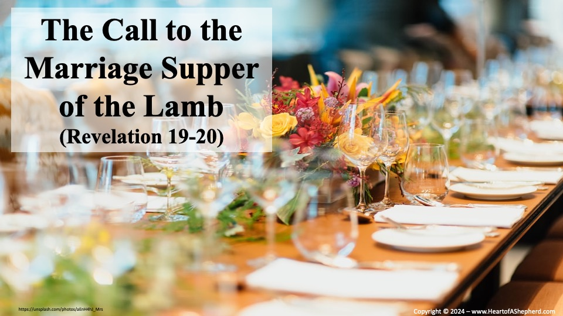
Because his death and resurrection is also called a wedding feast. There are dozens of nuptial references to God and Israel in the Old Testament, and now Jesus has come to fulfill these – to reunite us with God. Jesus is the bridegroom and we (the Church) are the bride. Jesus’ resurrection will complete this reunification, which is also referred to in the Book of Revelation as “The marriage supper of the Lamb” – Rev 19:9.
His mother said to the servers, “Do whatever he tells you.”
This response shows Mary is not offended and, in fact, she knows Jesus will do something. Jesus knows it, too, for he immediately acts, which shows that she has a role to play in this.
Therefore, Jesus is not only connecting his first miracle to the cross and the wedding feast; he is also connecting Mary to this unfolding story of salvation via her intercession. This is as it should be since she is the one who said, “Yes” to the incarnation, reversing Eve’s initial rejection of God.

What is the sign that Jesus performs and what does it signify?
The sign Jesus performs is changing the water into wine. In fact, John calls it “the first of his signs” (John 2:11).
What does it signify?
1) The water and wine points to the Last Supper, which is our earthly version of the “Supper of the Lamb” that gets repeated/completed in Heaven (Rev 19:6-9).
2) The water jars he transforms represent the Old Covenant, and the wine he creates in them represents their fulfillment – the New Covenant.
3) The over-abundance of wine Jesus creates points to the over-abundance of happiness awaiting us at the wedding feast in Heaven.
However, there is another signification going on – the fulfillment of the prophecies. Below, Isaiah describes the coming Age of Salvation:
Nations shall behold your vindication, and all kings your glory; You shall be called by a new name bestowed by the mouth of the LORD.
For as a young man marries a virgin, so will your Builder marry you; as a bridegroom rejoices over his bride, so shall your God rejoice over you. – Isaiah 62:2,5
Closing Prayer
Heavenly Father
We come before You fixing our eyes on Jesus Christ,
the spotless Lamb of God.
Lord Jesus, You are the one who takes away the sin of the world.
We lay our heavy burdens, our failures, and our regrets at Your cross.
Thank You for willingly offering Yourself as a pure sacrifice,
shedding Your blood so that our dark stains are washed white.
Lamb of God, You take away the sin of the world, have mercy on us.
Lamb of God, You take away the sin of the world, have mercy on us.
Lamb of God, You take away the sin of the world, grant us peace.


Comments