| 6.9.26 | Jesus' Early Years | Apostles Sent Out |
Catholic Understanding & Biblical Defense Class 6/9/26
Every Tuesday, 7PM-8PM (EST), 🖥️Zoom ID: 861 1782 2081 🗝️Passcode: 406952
Join to receive notifications and study notes on Meetup: www.meetup.com/catholicbiblestudy
Past classes are posted on our Catholic Catacombs Website: www.CatholicCatacombs.org
House Rules and Catholic Resources…
RSVP Reminder: Please RSVP whether you are attending the meeting or just reading the Recaps afterwards. The more RSVPs, the more Meetup will give exposure to “Catholic Bible Study” – a good thing!
Questions. We encourage questions although we ask that you keep them on topic and brief. You can ask during the meeting, or in the chat box, or if you prefer you can email us through Meetup.com, or Ron directly: ron@hallagan.net.
Respectfulness. We will be discussing differences between Christian denominations and religions in general, and we seek to be respectful at all times. Protestants especially are our friends and brothers/sisters-in-Christ; in fact, I owe much of my return to Christianity to them. Therefore, any critique of our brethren is in loving pursuit of apostolic truth.
No politics. It would be easy for us to self-destruct, but that’s not our goal :). Our goal is to learn, understand, and apply the Bible and our faith to our everyday lives.
Word on Fire. Bishop Robert Barron has reached millions through his 10 min Sunday homilies, podcasts, educational series and certifications, bibles, and other lectures and apologetics. www.wordonfire.org
Hallow App. Daily prayers and reflections, especially for the high holyday seasons. www.alex@mail.hallow.com
Catholic Answers – www.catholic.com. This is the best group/source for Catholic Apologetics on the planet.
Dynamic Catholic. Interested in daily inspirations to grow closer to God and the Church, not to speak of the many educational resources? Sign up for Matthew Kelly’s powerful insights, quotes, and reflections at www.dynamiccatholic.com.
“The Chosen” TV series. All of us seek a relationship with Jesus Christ, which is not always easy. It can help if we have seen and heard Him. The Chosen series captures Jesus better than any show I have ever seen. Highly recommended.
Cursillo. Interested in meeting with other men or women weekly over coffee to discuss God in your personal and professional life? Join Cursillo (cur-see-yo). Contact Jennifer Pence (Jennifer.pence@gmail.com) for more information.
Online- Catholic Prayer & Fellowship. Are you interested in praying the rosary, etc. with other Catholics during the week? Follow fellow member Jason Goldberg. Link: https://www.meetup.com/online-catholic-prayer-and-fellowship/
Bible Study Format
Our Bible Study is a combination of Exegesis and Apologetics.
Study and interpretation of Scripture A reasoned defense of the faith
Each meeting is (roughly) as follows:
min Apologetic Reflection
min Upcoming Gospel Reading
30 min Weekly topic/theme
1 hour
Week 1: Gospel Week – we study several Gospel stories, especially the tough ones.
Week 2: Bible Week – we are working our way through the Bible. We are studying the New Testament.
Week 3: Questions and Survey Topics chosen by Members:
1. Prison Ministry Stories 2. Plenary Indulgences 3. Explanation of the Mass and Eucharist 4. Dead Sea Scrolls 5. Catholicism vs modern cosmology? 6. The 7 Gifts/Fruits of the HS, 7 Deadly Sins 7. How to experience the Love of God 8. The Communion of Saints 9. Comparative Religions 10. Catholic vs Protestant beliefs
Week 4: Apologetics:
Gen 1-3 (Creation Story, Adam & Eve, the Fall of Man, The Meaning of Eve/the Trees/Summary
Faith vs Doubt – does having doubts make us bad Christians?
Don’t forget to RSVP.
Taylor will send a link to everyone with today’s notes.
The class is recorded if you want to listen to it anytime.
I will occasionally ask for volunteer readers…
Opening Prayer:
O LORD
Thank you for your promise that where two or three of us are gathered in your name, You are there!
We ask for Your help to open our minds and hearts tonight so that Your Word breaks through and changes our lives.
And as you taught us to pray together…
Our Father, who art in heaven, hallowed be your name.
Your kingdom come, your will be done, on earth as it is in heaven.
Give us this day our daily bread,
And forgive us our trespasses as we forgive those who have trespassed against us.
And lead us not into temptation, but deliver us from evil. Amen!
Major holy days: Sts. Peter & Paul (June 29)
The Assumption of Mary (August 15)
www.masstimes.org Mass or Confession anywhere/anytime in the world!
TODAY:
Gospel Reading for 11th Sun in Ord Time (6/14), The Harvest is Plentiful, The Laborers Few, Matt 9:36-10:8
Bible Timeline, New Testament – Jesus’ Early Life
Quotes of the Week:
We cannot think ourselves into good action, but we can act ourselves into good thinking. – Bill Wilson
Mood follows action. – Rich Roll
Modern behavior psychology has jumped on board with this, such as neuroscientist Andrew Humberman. Instead of waiting for motivation or a good mood to move you to action, take the right action first, which then builds the momentum required to shift your mindset. This is how one learns to “manage their mind” instead of letting events manage them.

5 Reflections on Corpus Christi, John 6:47-69, and the Body and Blood of Christ at the Mass
1) Although Jesus died for us on the cross we are supposed to share in that sacrifice – because it is about us and for us. This is what we do in the Eucharist – we unite ourselves to that same, eternal sacrifice Jesus made for us 2000 years ago.
2) As a matter of theology, the Body & Blood Jesus discusses is not his human body that hung/died on the cross but his glorified body after resurrection, because we are sharing his eternal, Trinitarian life; it’s also our spiritual nourishment. God is sharing His sacrifice for us/with us because we are becoming one with Jesus who takes us to Heaven. “Body & Blood” indicates the reality of Jesus’ full presence. As he said in John 6:56, he will abide (remain) in us, and us in him.
3) Jesus made consuming his Body & Blood easy for us. At the Last Supper he put himself (essence/presence) into the bread and wine, so that is how we share in his sacrifice (I’m sure the Apostles were relieved). Church officially puts it:
“Jesus gives us his Body and Blood under the species of bread and wine, by sacramental conversion, not by mere symbolism.”
4) As Thomas Aquinas and other philosophers have explained, the true presence or essence of something cannot be judged by its externals (appearances or “accidents”), just like “who you are” is not determined by the color of your hair or height and weight. When Jesus transforms the bread and wine at consecration into his being, it is his true presence irrespective of external appearances. It’s why we use the word “transubstantiation” for what happens at the consecration. In philosophical language, “substance” is “essence/being,” so “transubstantiation” is a change in who/what something is.
5) Note we aren’t done with the cross. Jesus tells us we must still be willing to continue carrying our crosses to be his followers, which means offering up our difficulties in this lifetime along with the sacrifices we make to help others. We are, in effect, attaching these sufferings to the cross, which can then be used to help others just like our prayers help others. In this way, we are “participating” in Jesus’ sacrificial love for us. It is why Christian suffering is never without meaning.
Reflection: The Blessed Trinity and the Age of the Holy Spirit

Genesis 1:26 reads: Then God said, “Let us make man in our image, according to our likeness.” This “image and likeness” refers to our spiritual natures that God breathed into us in Gen 2:7.
Why did God say, “us”? The Jews did not know what to make of His using the word “us,” so they assumed it was God and the angels talking. But we are not made in the image of angels; nor do the angels create anything. But, it was a fair guess on their part given there was no other information; that is, until God revealed the fullness of his Being in the New Testament.
Given our present knowledge of the Trinity, “God said” (singular) and “our image” (plural) makes perfect sense.
As discussed, we are now in the “Age of the Holy Spirit,” so it is good for us to continue focusing on the Holy Spirit: who He is and His role in our lives. At one level, trying to understand the Person and work of the Holy Spirit is nearly impossible: He is a supernatural Being, He is God, and yet He is different from God the Father and God the Son. One passage that is worth reviewing again is the baptism of Jesus, so let’s look at this:
"And the Holy Spirit descended on Him in a bodily form like a dove. And a voice came from heaven: You are My beloved Son. In You I am well pleased." (Luke 3:22).
When we read this passage, we can get lost in the imagery of the dove. Artists often depict a real dove in ways that describe the form and function of the dove and miss the greater point: Jesus is praying, God the Father is speaking, and the Holy Spirit is descending. The Holy Spirit is doing what the Holy Spirit does. He is the love that flows between the Father and the Son – and soon to include us!
Note that Luke, writing under the Spirit's inspiration, uses his words carefully. He doesn’t say the Holy Spirit IS a dove but that He comes down to Jesus from above “in a bodily form like a dove,” which just indicates that the Holy Spirit was somehow visible to their sight. The dove imagery not only represents purity & peace but also recalling the sacrificial offerings of the poor, who could only afford a dove. Whatever the Spirit looked like, He descended like a dove would descend. Beyond that, we have to use our imagination!
The Harvest is Plentiful, The Laborers Few, The Twelve Apostles – Matthew 9:36-10:8

Context:
Jesus’ ministry is taking off and the crowds are growing. In the tenth chapter, he finishes choosing the 12 apostles and immediately seeks to teach them what their role in salvation history will be.
Matthew 9:36-10:8
At the sight of the crowds, Jesus’ heart was moved with pity for them because they were troubled and abandoned, like sheep without a shepherd.
Then he said to his disciples, “The harvest is abundant but the laborers are few; so ask the master of the harvest to send out laborers for his harvest.”
Then he summoned his twelve disciples and gave them authority over unclean spirits to drive them out and to cure every disease and every illness.
The names of the twelve apostles are these: first, Simon called Peter, and his brother Andrew; James, the son of Zebedee, and his brother John; Philip and Bartholomew, Thomas and Matthew the tax collector; James, the son of Alphaeus, and Thaddeus; Simon from Cana, and Judas Iscariot who betrayed him.
Jesus sent out these twelve after instructing them thus, “Do not go into pagan territory or enter a Samaritan town. Go rather to the lost sheep of the house of Israel. As you go, make this proclamation: ‘The kingdom of heaven is at hand.’ Cure the sick, raise the dead, cleanse lepers, drive out demons. Without cost you have received; without cost you are to give.”

Exegesis/Interpretation

Who is the master of the harvest, who are the laborers, and what is the harvest?
The Master is God, the laborers are the disciples, and the harvest are the sheep in need of God’s saving help.
At the sight of the crowds, Jesus’ heart was moved with pity for them because they were troubled and abandoned, like sheep without a shepherd.
What triggers Jesus’ comments about needing to expand his mission?
Jesus' compassion for the people and their condition recalls numerous references using the sheep metaphor throughout the Old Testament (i.e., Num 27:17, 1 Kings 22:17, Judith 11:19, and especially Ezekiel chapter 34). This reference by Matthew is intentional.
Jesus acknowledges that the hierarchy of the Old Covenant leaders has failed the people – they are the "sheep without a shepherd."
We know that Jesus is the promised Shepherd, but now we see him developing additional “shepherds” (leaders) to go out into the villages. Is there confusion? Is the new shepherd Jesus – or the apostles?
Jesus is the promised Shepherd who accomplishes salvation for humanity – he reverses the Fall of Man, he pays for humanity’s sins, he reopens the gates of Heaven; but the other big thing He is doing is remaking the Old Covenant Church into a New Covenant Church. He is training new shepherds – who will operate in His name – to take over from the old leadership – the Temple priests and the Twelve Tribes of Israel (determined by blood relations). Salvation will now be for all nations.
Note this prophesy from Ezekiel:
Thus says the LORD God: Woe to the shepherds of Israel who have been pasturing themselves! ... Therefore, shepherds, hear the word of the LORD: As I live, says the LORD God, because my sheep have been given over to pillage, and because my sheep have become food for every wild beast, for lack of a shepherd; because my shepherds did not look after my sheep, but pastured themselves and did not pasture my sheep; because of this, shepherds, hear the word of the LORD: I swear I am coming against these shepherds and I myself will look after and tend my sheep. – Ezekiel 34
Jesus sent out these twelve after instructing them thus, “Do not go into pagan territory or enter a Samaritan town. Go rather to the lost sheep of the house of Israel.
This almost sounds scandalous. Why would Jesus tell them to avoid the Gentiles?
The plan for salvation had an order to it: start with the people of God first, then the rest of the nations. The people of God were offspring of Abraham who had endured 400 years of slavery in Egypt, numerous exiles, and routine mistreatment from their own leaders. It is appropriate that God comes for them first. They weren’t the “chosen people” because they were innately special; they were chosen to prepare the world for One Trinitarian God and the arrival of Jesus Christ.
As you will later see in all Paul’s letters, he starts in each new town in the synagogues to give them the Good News first; sometimes they listen and convert, sometimes they throw him out. But regardless, Paul immediately then goes to the Gentiles in the town.

Jesus seeking the lost sheep of Israel
As you go, make this proclamation: ‘The kingdom of heaven is at hand.’ Cure the sick, raise the dead, cleanse lepers, drive out demons. Without cost you have received; without cost you are to give.”
Note that their training as “shepherds” – later to be called bishops and priests – involved doing exactly what Jesus did. They are, in effect, “standing in” for Jesus, just like priests do today in all the sacraments. For example, it is not the priest who has the power to forgive in the confessional, it is Jesus doing the forgiving through him. During the consecration of the bread and wine at Mass, it is Jesus and the HS, not the priest, who effectuates the transubstantiation.
We know that different lists of the Apostles are not all exactly the same. Why are some different?
They are the same but in those days people utilized different traditions and languages, i.e., Aramaic, Greek, and Latin. Different traditions included attaching the fathers name (i.e., James, son of Zebedee), some attaching the city they were from (i.e., Simon the Cananaean), and some by a different group (i.e., Simon the Zealot). Other than that, the list of names were the same.
What is common about all of the lists?
Peter is always listed first and Judas Iscariot (the betrayer) is always listed last.

Why did Jesus choose 12 Apostles?
To replace the 12 Tribes of Israel. The 12 Tribes came from the 12 sons of the Patriarch Jacob.
No longer were the “12” determined by blood relations, but by faith. The 12 Apostles would lead the New Covenant Church to all the nations, with the help of the Holy Spirit.

1800 BC 33 AD
Who was Jacob’s father and grandfather?
Isaac was Jacob’s father and Abraham was his grandfather.
What other name did Jacob receive after wrestling with an angel all night?
Jacob was given the name Israel, which eventually became the name of the people and their country.

Introduction to The New Testament
In the opening of Jesus’s ministry in the Gospel of Matthew, Jesus goes up a mountain and sits down to teach. In the Old Testament, we find Moses, the great teacher, also going up a mountain to receive the law and then sitting down to teach it. However, Jesus is not receiving a law; he is giving one.
Theologian NT Wright pointed out that the Old Testament is essentially an unfinished symphony. It is the articulation of a hope but without a realization of that hope. As the fulfillment of Israel’s entire story, Jesus begins his primary teaching with the Beatitudes, a title that stems from the Latin noun beatitudo, meaning “happy” or “blessed.”
Through this series of paradoxes and surprises, Jesus confirms that God’s priorities are often the opposite of this world. That’s why he came here the way he did, and then went to save all the outcasts after that. He said what makes us great here is not making the “self” great, but making our egos small. With “Blessed are the poor in spirit,” we could say instead, “How lucky we are if we are not addicted to material things.” Jesus is telling us that our deepest desire – which is wired into our spiritual natures – is the desire for God and not for passing things that only bring temporary comfort.
Welcome to the New Testament.

How many books in the OT?
46

How many books in the NT?
27
Total in Bible: 46 + 27 = 73
As we move into the New Testament, we will not read all 27 books, but will continue the “Biblical Timeline Narrative,” which will primarily be the Gospel of Luke and the Acts of the Apostles, although other books will be referenced throughout. Much of today’s content was taken from the “Bible In A Year,” which does an excellent job at the Timeline Narrative.

The New Testament can be divided into two parts (I and II below).
Part I – The Gospels: The Life of Christ
1. The historical setting into which the new Davidic king is born. ✔
The Roman Republic and Caesar Augustus ✔
Herod the Great ✔
Jesus’ Birth ✔
The Ark of the New Covenant … Mary at the Annunciation, and then all of us in the Eucharist. ✔
2 Jesus’ public ministry and key aspects of his teaching throughout Judea and Galilee.
Jesus’ Early Life
John the Baptist
Jesus’ public ministry and key aspects of his teaching throughout Judea and Galilee
Jesus heads towards Jerusalem for the last time.
3 Jesus’ passion and death, which climaxes and completes the story of Israel.
4 Jesus’ resurrection, his encounter with the two disciples on the road to Emmaus, and his Ascension.
Part II – The Church: Acts of the Apostles, Letters, Revelation
* For our studying of the New Testament, I will be following along Jeff Cavins’ “Bible in a Year” course, which I highly recommend.
Jesus’ Early Life
Last month we discussed Jesus’ birth. There was no royal imagery. The angels bring “good news” to the shepherds for all the people: a child is born who is the Savior and Christ the Lord.
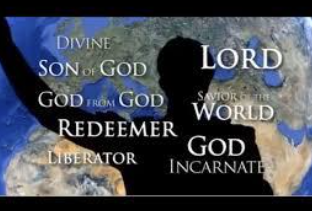
Luke’s gospel highlights the irony of that Caesar Augustus’ census sets in motion events that lead to the prophetic fulfillment of Jesus being born in Bethlehem, the city of David. The titles of Son of God, Lord, Savior of the World, Redeemer/Liberator, and King of Kings were titles given to Caesar. The irony is not only in the shared titles, but that one was at the top of the worldly order, and one was born into the bottom of the worldly order, though he was really the King of the Universe. These ironies flowed through everything Jesus taught us, which were often the reverse of the world’s priorities, such as humility leads to true greatness, and the more we give love away, the more we have.
When the time came for the purification, they brought Jesus to Jerusalem to present him to the Lord and offered a sacrifice of “a pair of turtledoves or two young pigeons.” This was when they encounter Simeon and the Prophetess Anna at the Temple, who announce that this child has come for the consolation of Israel; though Simeon also warned Mary that a sword would pierce her heart.

Joseph is then warned in a dream to flee with Mary and the child to Egypt to escape King Herod’s sword. They return after Herod’s death, settling again in Nazareth.
When Jesus was twelve, the Holy Family traveled to Jerusalem as was required for the Passover festival. Afterwards, as Joseph and Mary began their return to Nazareth, Jesus stayed behind in Jerusalem. Mary and Joseph had to return and search Jerusalem for 3 days. Can you imagine the panic? I wonder what Mary’s and Joseph’s prayers were during that time? “Oh dear LORD, we are so sorry but we seem to have lost the Son of God!”
Jesus was eventually found in the temple among the teachers, “listening… and asking… questions,” and “those who heard Him were amazed.” He then went with Mary and Joseph to Nazareth, where he “grew and became strong, filled with wisdom and God’s favor rested on Him.”
Jesus was known as a carpenter in Nazareth (Mk 6:3). Like most men of that time, Jesus was a laborer for many years.

When did St. Joseph, Jesus’ foster father, die?
The Church does not know the exact date when Saint Joseph died. The Gospels stop mentioning him after Jesus’ childhood, and it is therefore unlikely a time can be pinpointed, but it is believed that he died in Nazareth, with Mary and Jesus, before Jesus’ public ministry began.
Why is there so little written about Jesus’ childhood?
There is little information about Jesus’ childhood mainly because the Gospels were not written as biographies, but as testimonies meant to lead people to faith in Jesus, the Savior (Christ), the Son of God. The Gospels were intended to answer questions of prophecy, theology, and salvation, not satisfy our curiosity.
When did Jesus’ public ministry begin?
Jesus’ public ministry begins with his baptism by John the Baptist in the Jordan River.
The Gospels also indicate that Jesus was “about thirty years old” when he began his work (Luke 3:23). Did this age (30) have any significance in those days?
The age of 30 was a significant milestone in ancient Jewish tradition, as it was considered the age of full physical and mental maturity, making it appropriate for taking on high degrees of responsibility.
What year would his baptism have taken place?
Approximately 27AD to 29AD.
Closing Prayer
Lord, we thank you for the blessing of reading your word together.
We ask that these words of life, truth and hope enlighten our minds and strengthen our faith.
May your love and grace follow each of us as we return to our daily lives, refreshed and blessed by you.
We ask all this in your name.
Glory be to the Father, the Son, and the Holy Spirit
As it was in the beginning, is now, and ever shall be
World without end.
Amen


Comments