04.07.2026 - Upper Room - Divine Mercy Sunday - Doubting Thomas
- tmaley
- Apr 10
- 15 min read
Catholic Understanding & Biblical Defense Class 4/7/26
Every Tuesday, 7PM-8PM (EST), on Meetup: www.meetup.com/catholicbiblestudy
Past classes are posted on our Catholic Catacombs Website: www.CatholicCatacombs.org
House rules, Catholic resources…
1. RSVP Reminder: Please RSVP whether you are attending the meeting or just reading the Recaps afterwards. The more RSVPs, the more Meetup will give exposure to “Catholic Bible Study” – a good thing!
2. Questions. We encourage questions although we ask that you keep them on topic and brief. You can ask during the meeting, or in the chat box, or if you prefer you can email us through Meetup.com, or Ron directly: ron@hallagan.net.
3. Respectfulness. We will be discussing differences between Christian denominations and religions in general, and we seek to be respectful at all times. Protestants especially are our friends and brothers/sisters-in-Christ; in fact, I owe much of my return to Christianity to them. Therefore, any critique of our brethren is in loving pursuit of apostolic truth.
4. No politics. It would be easy for us to self-destruct, but that’s not our goal :). Our goal is to learn, understand, and apply the Bible and our Catholic faith to our everyday lives.
5. Dynamic Catholic. Interested in receiving daily inspirations to grow closer to God and the Catholic Church, not to speak of the many educational resources? Visit and sign up for Matthew Kelly’s powerful insights, quotes, and reflections at www.dynamiccatholic.com.
6. Word on Fire. Bishop Robert Barron has reached millions through his 10 min Sunday homilies, podcasts, educational series and certifications, bibles, and other lectures and apologetics. www.wordonfire.org
7. “The Chosen” TV series. All of us seek a relationship with Jesus Christ, which is not always easy. It can help if we have seen and heard Him. The Chosen series captures Jesus better than any show I have ever seen. Highly recommended.
8. Cursillo. Interested in meeting weekly over coffee to discuss how God is involved in your personal and professional life? Join Cursillo (cur-see-yo). Initiation involves a 3-day retreat at Mission Hurst in Arlington. For men’s groups, contact Ron (ron@hallagan.net) and Jennifer Pence (Jennifer.pence@gmail.com) for women’s groups.
9. Online- Catholic Prayer & Fellowship. Are you interested in praying the rosary, etc. with other Catholics during the week? Follow fellow member Jason Goldberg. Link: https://www.meetup.com/online-catholic-prayer-and-fellowship/

Each meeting is a Speaker/Q&A format, roughly as follows:
15 min Apologetic Reflection
15 min Upcoming Gospel Reading
30 min Weekly topic/theme
1 hour
Week 1: Gospel Week – we study several Gospel stories, especially the tough ones.
Week 2: Bible Week – we are working our way through the Bible. We are studying the Prophets.
Week 3: Questions and Survey Topics chosen by Members:
1. Explanation of the Mass and Eucharist 2. The Dead Sea Scrolls 3. Catholicism related to modern cosmology? 4. The 7 Gifts/Fruits of the HS & 7 Deadly Sins 5. Does doubting one’s faith mean we are failing God? 6. How do we experience the Love of God? 7. The Communion of Saints 8. Comparative Religions 9. Catholic vs Protestant beliefs
Week 4: Apologetics:
1. Gen 1-3 (Creation Story, Adam & Eve, the Fall of Man, The Meaning of the Trees/Summary)
2. Faith and Doubt
1. Please RSVP to these classes, it boosts Catholic Bible Study visibility on MeetUp.
2. Taylor will send a link to everyone with today’s notes once the edits are done.
3. The class is also recorded if you want to listen to it anytime.
4. I will occasionally ask for volunteer readers…
5. Mass or Confession anywhere, anytime: www.masstimes.org
Opening Prayer
Eucharistia (gratitude): Thank you, Lord, I am grateful for your saving presence in my life.
Kenosis (emptying self): Lord, I will try to empty myself as you did, to be present to others.
Metanoia (change self): Today, every moment, Lord, I will turn my mind, my heart, and my world towards You.
Maranatha: Come, Lord Jesus, enter, and make your home with me.
And as Jesus taught us to pray …
Our Father
Who art in Heaven, Hallowed be Thy Name.
Thy Kingdom come, Thy Will be done, on earth as it is in Heaven.
Give us this day our daily Bread;
And forgive us our trespasses as we forgive those who trespass against us.
And lead us not into temptation but deliver us from evil. Amen.
Major holy days: The Ascension of the Lord: Thurs, May 14 (Sun, May 17)
Pentecost: Sun, May 24
Today’s Agenda…
Reflections: What is Joy? What is the Mezuzah? The “Upper Room.”
Gospel Reading for the 2nd Sun of Easter (4/12) – Divine Mercy Sunday: Doubting Thomas and the Origins of
Confession, John 20:19-31
What is Joy?
1. Joy and happiness are usually interchangeable, but joy is usually considered to be more lasting. Biblical joy is a profound satisfaction in God that transcends our temporal circumstances. If God is our rock, storms can’t hurt us.
2. We cannot generally enter directly into joy; rather, it works backwards.
For example, even when we do little things for others, then joy comes back to us; not before. Even when we do tasks that we should do but don’t want to do, the good feelings come back to us afterwards. And – especially – when we take the time to consider what we have to be grateful for, only then does joy find fertile ground in us. Thus, joy works backwards.
What is the Mezuzah? TayQuiz
A mezuzah is a small parchment scroll inscribed with Torah verses (Shema prayer), usually placed in a case, and affixed to the right doorposts of Jewish homes to fulfill a biblical command (Deut 6:4-9), signifies Jewish identity, and provide spiritual protection.

What is the Shema prayer? Like every Jew, Jesus would have said this twice a day.
Shema is a declaration of faith, affirming that God is One, and that He is the center of one’s existence. “Shema” is Hebrew, meaning “hear,” “listen,” or “heed” – which is how the prayer begins:
Hear, O Israel, the Lord our God is One.
And you shall love the Lord thy God with all your heart, all your soul, and all your might.
God’s instructions go on to say…
“And you must commit yourselves to these words that I am giving you today. And you shall teach them diligently to your children and speak of them when you sit at home and when you walk along the road, when you lie down and when you get up. Tie them as reminders on your hands and bind them on your foreheads. Write them on the doorposts of your houses and on your gates.” (Deuteronomy 6:4-9)
See how God knows us! If we don’t keep Him front and center in our lives, He will move to the bottom of our lives. How can he help us (or save us) if we allow that to happen?
The Upper Room


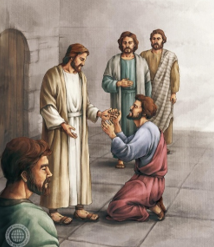
It didn’t have a formal title of “Upper Room” back in the day, although there were a number of references to “upper room.” Tradition has it as one location vs multiple places. Some say it was the house of Mark’s mother, Mary, but that doesn’t exactly correlate with Jesus’ instructions to the Apostles (Luke and Mark) to go and speak to a man carrying a jar of water using the room for the Passover (Last Supper).
On the first day of the Feast of Unleavened Bread, when they sacrificed the Passover lamb, his disciples said to Jesus, “Where do you want us to go and prepare for you to eat the Passover?”
He sent two of his disciples and said to them, “Go into the city and a man will meet you, carrying a jar of water. Follow him. Wherever he enters, say to the master of the house, ‘The Teacher says, “Where is my guest room where I may eat the Passover with my disciples?”’
Then he will show you a large upper room furnished and ready. Make the preparations for us there.”
The disciples then went off, entered the city, and found it just as he had told them; and they prepared the Passover.
I had assumed the “man” carrying the water would be evidence against Mark’s mother owning the Upper Room, but then I found out that the translation for ‘man’ was generic, like human, or mankind, or the Fall of “Man.” So, maybe she was the owner!
How many New Testament events take place in the Upper Room?
Four.
1. The Last Supper – the institution of the Sacrament of the Eucharist/Mass.
2. Easter Sunday – the disciples are commissioned to preach the Gospel to the world, from which the Sacrament of Holy Orders was eventually derived. Also on Easter, the disciples are commissioned to forgive sins – the Sacrament of Confession is instituted.
3. The Apostles gathered here after Jesus’ Ascension (before the Pentecost) and elected Matthias to replace Judas (Acts 1:12-26), which would have been the beginning of what we now call Apostolic Succession
4. Pentecost Sunday – the Holy Spirit comes to the Apostles, which was not only the beginning of the Church, but where we derive the Sacrament of Confirmation.

The Upper Room preserved as you will see it today.
Who is buried underneath the Upper Room?
King David.

Jerusalem in the time of Jesus.
The “Upper Room” is now called the “Cenacle” (Latin meaning dining room) – in the Essene Quarter.
Divine Mercy Sunday, John 20:19-31
The Risen Jesus visits the Upper Room on Easter Sunday

Context
This reading takes place the day of Jesus’ resurrection, Easter Sunday. Some things to look for in the reading:
1. Jesus enters the Upper Room on the “First Day of the Week” What does that mean?
John keeps emphasizing that Jesus’ resurrection – the opening of Heaven to humans – is like a new creation. The 7th day of the week was at the end of creation in Genesis 1. The 1st day was the beginning of creation.
2. Jesus enters the room even though it is locked. He is not a ghost (purely spiritual) – he has his body and shows them his wounds. He is showing us a glorified body. What is that?
His spiritual nature has dominance over his physical nature. The laws of physics no longer have the upper hand. The same will happen to us when we get our glorified bodies back after Judgment Day.
3. Jesus enters and breathes the Holy Spirit on them and gives them two instructions – the authority to do two things. What are they?
(1) To preach the Good News (the Gospel) to the world in His name.
(2) To forgive/retain sins in His name.
4. Thomas is not in the Upper Room on Easter Day. But it is there a week later. What can we learn about doubt from this?
5. There is a Plenary Indulgence given for Divine Mercy Sunday every year. Whis does this mean and what must we do?
1) A Plenary Indulgence is the remission of all temporal punishment due to sins already forgiven. Reduces Purgatory.
2) Recite the Our Father and Nicene Creed before the Blessed Sacrament, 2) go to confession, 3) receive communion on Divine Mercy Sunday, 4) pray for the intentions of the Pope, and 5) have no attachment (desire) to your sins.
Divine Mercy Sunday
On the evening of that first day of the week, when the doors were locked, where the disciples were, for fear of the Jews, Jesus came and stood in their midst and said to them, “Peace be with you.” When he had said this, he showed them his hands and his side. The disciples rejoiced when they saw the Lord.
Jesus said to them again, “Peace be with you. As the Father has sent me, so I send you.”
And when he had said this, he breathed on them and said to them, “Receive the Holy Spirit. Whose sins you forgive are forgiven them, and whose sins you retain are retained.”
Thomas, called Didymus, one of the Twelve, was not with them when Jesus came. So the other disciples said to him, “We have seen the Lord.”
But he said to them, “Unless I see the mark of the nails in his hands and put my finger into the nail marks and put my hand into his side, I will not believe.”
Now a week later his disciples were again inside and Thomas was with them. Jesus came, although the doors were locked, and stood in their midst and said, “Peace be with you.” Then he said to Thomas, “Put your finger here and see my hands, and bring your hand and put it into my side, and do not be unbelieving, but believe.”
Thomas answered and said to him, “My Lord and my God!”
Jesus said to him, “Have you come to believe because you have seen me? Blessed are those who have not seen and have believed.”
Now, Jesus did many other signs in the presence of his disciples that are not written in this book. But these are written that you may come to believe that Jesus is the Christ, the Son of God, and that through this belief you may have life in his name.
Exegesis/Interpretation
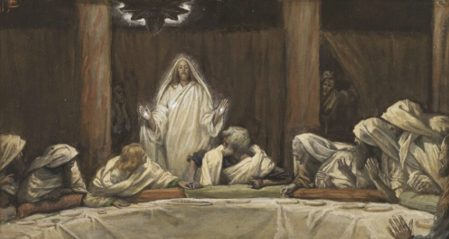
On the evening of that first day of the week…
Easter Sunday, the day after the 7th Day, the first day of the new creation...
… when the doors were locked … for fear of the Jews, Jesus came and stood in their midst …
Jesus’ glorified body walks through doors (or just relocates inside the Upper Room). In Luke’s Gospel, Jesus asks for some food, and they give him a piece of fish, which he eats, and the fish doesn’t fall out of him! (Luke 24:41-43)
Jesus has a spiritual and physical nature. Humans have a spiritual and physical nature. What’s the difference between Jesus and us in this story?
Jesus is showing us what a glorified body is like. The difference is that our physical/animal nature is dominant. We can’t just “will” things into action! With a glorified body, the spiritual nature is dominant. You still have both natures but your physical nature obeys your spiritual (your intellect and will).
We will all have glorified bodies in Heaven – and there will be a “new Earth.” The possibilities are hard to imagine!
… and said to them, “Peace be with you.”
They were in fear of the Jews (would they be next?) and would also have been fearful of Jesus’ appearance, for they all abandoned him except for John. Jesus knows their state and says, “Shalom!”
When he had said this, he showed them his hands and his side. The disciples rejoiced…
This tells us Jesus was not a ghost. He had his body!
They rejoiced… can you imagine the bewilderment and excitement all at once?
Jesus said … As the Father has sent me, so I send you.”
This is the first instructions Jesus delivers – to go out and preach the Good News (the Gospel)!
The word “apostle” is Greek for “one who is sent.”
And when he had said this, he breathed on them and said to them, “Receive the Holy Spirit. Whose sins you forgive are forgiven them, and whose sins you retain are retained.”
Gen 2:7 – God breathed his spirit into man. Jesus is again renewing mankind’s creation.
His second instructions to them are now joined to the first: they are to go out and preach the Gospel and forgive sins.
What is the condition for forgiving sins vs. retaining them?
Repentance (Metanoia - internal change): regret the sin, request forgiveness, seek to change one’s ways.
Thomas, called Didymus, one of the Twelve, was not with them when Jesus came. So the other disciples said to him, “We have seen the Lord.” But he said to them, “Unless I see the mark of the nails in his hands and put my finger into the nail marks and put my hand into his side, I will not believe.”
Nothing in Scripture is by accident. This information is provided for our benefit. It’s okay to have doubts, but don’t
let them have the last word. We call him the “Doubting Thomas,” but actually his next statement will make him the first in the Bible to proclaim JESUS IS GOD.
Now a week later his disciples were again inside and Thomas was with them. Jesus came, although the doors were locked, and stood in their midst and said, “Peace be with you.” Then he said to Thomas, “Put your finger here and see my hands, and bring your hand and put it into my side, and do not be unbelieving, but believe.”
Note Jesus didn’t abandon Thomas – or even criticize him – for his doubting. In fact, Jesus came back to win him
over. That’s what God does!
Thomas answered and said to him, “My Lord and my God!”
There it is. FYI – Thomas goes on to be a great apostle.
Jesus said to him, “Have you come to believe because you have seen me? Blessed are those who have not seen and have believed.”
Remember the Beatitudes… “Blessed be…”? Jesus is now proclaiming a beatitude for everyone who believes in the future – that includes us. Congratulations.
Now, Jesus did many other signs in the presence of his disciples that are not written in this book. But these are written that you may come to believe that Jesus is the Christ, the Son of God, and that through this belief you may have life in his name.
This tells us not everything is “in the Bible.” In fact, there was no “Bible” until 381 AD when the Church formalized the first one at the Council of Constantinople. The term we use for all our beliefs that are not explicitly in the Bible is called “Apostolic Tradition.” Church tradition and the Bible go together, and they can never be in conflict with each other.

What is so strange about Jesus saying: “Whose sins you forgive are forgiven, and whose sins you retain are retained”?
Until this time, only God could forgive sins. One of the accusations by the Pharisees against Jesus was blasphemy for forgiving people’s sins, because only God could do that. Of course, they failed to recognize who Jesus was. Now, Jesus is expanding forgiveness in an incredible way.
Take special notice that Jesus is making this power to forgive sins his first official act after his Resurrection, which should not surprise us since this is the reason for which he died.
Forgiveness is not a one-and-done event, or else he would not have commissioned the Apostles. Not only that, but this is Jesus’ first move after his resurrection. But forgiveness is the easy part – he wants to give it to us no matter how many times we ask for it. God DELIGHTS in giving us forgiveness, because of the other benefits that come from it, such as ...
What else happens when we seek forgiveness?
First, humility. To seek forgiveness, one must humble themselves to admit that they are mistaken. Jesus showed us humility as much as he preached it, making it a virtue (habit) lines our path to Heaven. Some examples:
1) Jesus emptied himself of his pure Godhood to take on our humanity to save us from ourselves, even knowing what we would do to him. 2) In doing so, he allowed himself to become a vulnerable, helpless child, completely dependent on others. Furthermore, he allowed himself to be born into a poor family; and in an occupied country, no less. 3) When Jesus began his ministry, he didn’t go to kings, Temple leaders, or other “influencers” – he went to the sick and the sinners. 4) He didn’t ride victoriously into Jerusalem on a white stallion like King David; he rode in on a lowly donkey. 5) He washed the feet of his disciples at the Last Supper, and 6) he offered himself up to the Father to pay for our sins.
In other words, God LOVES a humble heart, but like all virtues, humility is a habit which must be learned. God will
help us.
Second, speaking. When we just think of our mistakes, it’s not the same as when we speak them out loud. Articulating our sins makes them real. Half of psychotherapy is letting people talk about their problems rather than keeping them inside. Jesus obviously knew this, or he wouldn’t have instructed his Apostles this way.
Third, relationship. We talk to ourselves in our minds all the time. We are talking to our egos. What do we expect to get out of that but more of the same problems? But when we reflect with God about what we could do better or differently next time, the Holy Spirit becomes our sounding board instead of our egos. Suddenly, the truth can shine in and wisdom can enter. As we commit to making amends where possible and at make an effort to improve our behavior, God will pour out grace to us to assist us, no matter how often. This is an essential component of seeking forgiveness – what will my behavior be in the future?
“Now I call you my friends….” – John 15:15.
Conclusion.
The goal is for us to move from the 6th Day (fallen world) into the Lord’s Day (Heaven). Towards this end, Christianity is not only a relationship with God, it is also a “religion” in the sense that there are routines, sacraments, and guidelines to help us learn to become more like God. Without these, our lower animal appetites (desires) seek to rule our lives and keep us in the 6th Day.
What is Thomas’ last name and what happened to him?
Thomas Didymus. He went to India in 52 AD, then China, then back to India. He was killed in 72 AD by Hindu priests in Mylapore, India. However, he planted the seeds of Christianity and is remembered in India to this day.

Closing Prayer:
O Lord
You are the Vine and we are the branches:
Your Spirit and Life flow through us;
You are in us, we are in You.
We are one.
Hail Mary
Hail Mary, full of grace, the Lord is with thee.
Blessed are thou among women,
and blessed is the fruit of thy womb Jesus.
Holy Mary, Mother of God,
pray for us sinners,
now and at the hour of our death.
Amen.


Comments