9.29.26 | Archangels | Wicked | Tenants | Love of God |
Catholic Understanding & Biblical Defense Class 9/29/26
Every Tuesday, 7PM-8PM (EST), 🖥️Zoom ID: 861 1782 2081 🗝️Passcode: 406952
Join to receive notifications and study notes on Meetup: www.meetup.com/catholicbiblestudy
Past classes are posted on our Catholic Catacombs Website: www.CatholicCatacombs.org
House Rules and Catholic Resources…
1. RSVP Reminder: Please RSVP whether you are attending the meeting or just reading the Recaps afterwards. The more RSVPs, the more Meetup will give exposure to “Catholic Bible Study” – a good thing!
2. Questions. We encourage questions although we ask that you keep them on topic and brief. You can ask during the meeting, or in the chat box, or if you prefer you can email us through Meetup.com, or Ron directly: ron@hallagan.net.
3. Respectfulness. We will be discussing differences between Christian denominations and religions in general, and we seek to be respectful at all times. Protestants especially are our friends and brothers/sisters-in-Christ; in fact, I owe much of my return to Christianity to them. Therefore, any critique of our brethren is in loving pursuit of apostolic truth.
4. No politics. It would be easy for us to self-destruct, but that’s not our goal :). Our goal is to learn, understand, and apply the Bible and our faith to our everyday lives.
5. Word on Fire. Bishop Robert Barron has reached millions through his 10 min Sunday homilies, podcasts, educational series and certifications, bibles, and other lectures and apologetics. www.wordonfire.org
6. Hallow App. Daily prayers and reflections, especially for the high holyday seasons. www.alex@mail.hallow.com
7. Catholic Answers – www.catholic.com. Best site for Catholic Apologetics there is.
8. Dynamic Catholic. Interested in daily inspirations to grow closer to God and the Church, not to speak of the many educational resources? Sign up for Matthew Kelly’s powerful insights, quotes, and reflections at www.dynamiccatholic.com.
9. “The Chosen” TV series. All of us seek a relationship with Jesus Christ, which is not always easy. It can help if we have seen and heard Him. The Chosen series captures Jesus better than any show I have ever seen. Highly recommended.
10.Cursillo. Interested in meeting with other men or women weekly over coffee to discuss God in your personal and professional life? Join Cursillo (cur-see-yo). Contact Jennifer Pence (Jennifer.pence@gmail.com) for more information.
Bible Study Format
Our Bible Study is a combination of Exegesis and Apologetics.


Each meeting is (roughly) as follows:
15 min Apologetic Reflection
15 min Upcoming Gospel Reading
30 min Weekly topic/theme
1 hour
Week 1: Gospel Week – we study several Gospel stories, especially the tough ones.
Week 2: Bible Week – we are working our way through the Bible. We are studying the New Testament.
Weeks 3 & 4: Survey Topics chosen by Members (explanations of our faith & apologetics):
1. Prison Ministry Stories 2. Plenary Indulgences 3. Gen 1-3 (Creation Story, Adam & Eve, the Fall of Man)
4. Faith vs Doubts – does having doubts make us bad Christians? 5. Explanation of the Mass & Eucharist
6. Dead Sea Scrolls 7. Catholicism vs modern cosmology and Evolution 8. Fruits of the HS, 7 Deadly Sins
9. How do we experience the Love of God? 10. The Communion of Saints
11. Comparative Religions 12. Catholic vs Protestant beliefs
· Don’t forget to RSVP.
· Taylor will send a link to everyone with today’s notes.
· The class is recorded if you want to listen to it anytime.
· I will occasionally ask for volunteer readers…
Opening Prayer
LORD, thank you for your promise that where two or three of us are gathered in your name, You are there.
We welcome You among us today!
We ask that You open our ears so that we hear your voice and receive Your peace and Your wisdom.
And as Jesus taught us to pray …
Our Father
Who art in Heaven, Hallowed be Thy Name.
Thy Kingdom come, Thy Will be done, on earth as it is in Heaven.
Give us this day our daily Bread;
And forgive us our trespasses as we forgive those who trespass against us.
And lead us not into temptation but deliver us from evil. Amen.
Major holy days: Next Solemnity: All Saints Day (Nov 1)
Memorials – September: Archangels Michael, Gabriel, Raphael-29
Memorials – October: Our Guardian Angels-2, Feast of Apostles/Saints Simon and Jude-28
www.masstimes.org: Mass or Confession anywhere/anytime in the world!
Today’s Agenda…
Reflection: Feast Day of Saints Michael, Gabriel, and Raphael, Archangels
Gospel Reading for 27th Sun in Ord Time 10/4: The Parable of the Wicked Tenants, Matthew 21:33-43
Member Topic: How do we experience the love of God?
Term of the Week: What is Stewardship?
“The Lord God put them in the Garden of Eden to work it and take care of it.” – Genesis 2:15
“The Earth is the Lord’s and everything in it, the world and all who live in it.” – Psalm 24:1
“Acting as the trusted overseer and protector of something worth caring for and preserving rather than the absolute owner.” – Dictionary
This does not mean we can’t own things in this lifetime; it’s about remaining cognizant that we are not the ultimate owner of anything. If you ever have a question about it, ask, “Can I take this with me when my time comes?”
Reflection
Archangels Michael, Gabriel, Raphael – Feast Day Sept 29
The Feast of Saints Michael, Gabriel, and Raphael reminds us that God does not abandon His creation. Throughout Scripture, angels serve God’s saving plan by announcing His will, protecting His people, and guiding them toward salvation. They are not the center of our faith; instead, they direct us toward God.

Saint Michael’s name is a question – it means “Who is like God?” What on earth could this imply?
It is the opposite of how it sounds. It is not saying he is like God. It is Michael’s declaration that God has no rival. He would have directed that first to Lucifer/Satan, who thought he WAS like God. Archangel Lucifer fell because of pride.
In Scripture, Michael appears as a defender of God’s sovereignty and the protector of God’s people. The Prophet Daniel presents him as the great prince who stands for Israel; St. Jude calls him “the archangel” in conflict with the devil; and the Book of Revelation depicts him leading the heavenly host of angels against the Dragon (Satan) and casting him out of Heaven. Catholic tradition therefore venerates Michael as a guardian and champion of the Church, especially in spiritual warfare. His example reminds Christians that true greatness does not oppose God but receives dignity from God. Whereas Lucifer was guilty of pride, Michael’s mission directs attention away from pride and toward faithful service of the Lord.
Saint Gabriel – who recalls where Gabriel shows up in the Bible?
Gabriel’s name means “God is my strength.” His appearances in the Bible are exclusively focused on delivering history-shaping countdowns and messages to just three individuals spanning 500 years – Daniel, Zechariah, and Mary. Consequently, he is the patron saint of messengers, telecommunication workers, and postal workers.
In the Old Testament, Gabriel interprets Daniel’s visions and tells him the Messiah will not come until 490 years after Jerusalem is restored after the Babylonian Exile. Then in the New Testament, the same Gabriel shows up to Zechariah informing him about the birth of John the Baptist. Then Gabriel brings Mary the message of the Incarnation, and Mary responds with her trusting “yes.” Because Gabriel delivered the message of Christ’s conception, Catholic tradition especially identifies Gabriel as the “messenger of the Incarnation.” Gabriel thus represents divine proclamation, hope, consolation, and the call to bring Christ to the world.

Saint Raphael
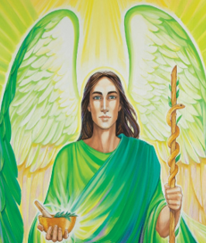
Raphael’s name means “God heals.” He is known chiefly from the Book of Tobit, where he travels undercover on a road trip as an ordinary human named “Azariah,” acting as Tobias’ travel guide and wingman. He protects the blind Tobias, helps deliver his distant relative, Sarah, from demonic oppression (her 7 previous husbands all died but Raphael approves her marriage to Tobias), and then finally contributes to the healing of Tobit’s blindness. Near the end of this dramatic book, Raphael identifies himself as one of the angels sent by God, which is yet another climax in the story.
Catholic tradition thus associates Raphael with healing, protection, guidance, and the restoration of relationships. His ministry illustrates that God’s angels can accompany people through ordinary journeys, dangers, illnesses, family difficulties, and spiritual suffering. Raphael points beyond every earthly remedy to God, the ultimate source of healing.
Matthew 21:33-43
The Parable of the Wicked Tenants

Context:
Last week I mentioned that Jesus entered Jerusalem for the last time at the beginning of Matthew chapter 18, which once again means our reading is during Holy Week – Holy Tuesday. Jesus is preaching in the Temple grounds and his audience is the Jewish chief priests, scribes, and Pharisees. If arriving on a donkey (prophesied in Zechariah 9:9) in a parade on Palm Sunday wasn’t enough to upset the Jewish leaders, Jesus is will certainly increase their angst and anger in his preaching at the Temple. As we know, he will be betrayed and arrested Thursday night after the Last Supper.
In today’s reading, Jesus tells a striking story about a landowner who planted a vineyard. One reason it was striking was because he was echoing the vineyard allegory used by Isaiah in 700 BC (Isaiah 5). In Isaiah, God gives a vineyard to his people, who are to produce good grapes (righteousness) for wine. Instead, the people produce wild grapes, which are sour and cannot be used. This is an allegory of exactly what happens in the Promised Land (Israel) after Exodus.
In a sense, Jesus’ parable is an allegory of Isaiah’s allegory, as he brings that old story to completion.
The owner of the vineyard in Jesus’ story is God, the vineyard stands for the House of Israel, the tenants who are supposed to care for the vineyard are the Temple leaders (priests, elders, and scribes), and the first two groups of servants that the owner sends to check on the vineyard – who are murdered – are the prophets sent by God.
In a fascinating way, the vineyard story reminds us of our first parents who were set in a beautiful garden (Eden) to care for it. Alas, they rebel against God. In the vineyard story, God also gives his people (the tenants) a place where they can find rest, enjoyment, and good work. Sadly, the tenants follow in their first parents’ footsteps.
Mankind’s response never seems to change. But rather than God despairing of us, He sends us his Son.

Matthew 21:33-43, The Parable of the Wicked Tenants
Jesus said to the chief priests and the elders of the people:
"Hear another parable. There was a landowner who planted a vineyard, put a hedge around it, dug a wine press in it, and built a tower. Then he leased it to tenants and went on a journey.
When vintage time drew near, he sent his servants to the tenants to obtain his produce. But the tenants seized the servants and one they beat, another they killed, and a third they stoned. Again he sent other servants, more numerous than the first ones, but they treated them in the same way. Finally, he sent his son to them, thinking, 'They will respect my son.'
But when the tenants saw the son, they said to one another, 'This is the heir. Come, let us kill him and acquire his inheritance.' They seized him, threw him out of the vineyard, and killed him.
What will the owner of the vineyard do to those tenants when he comes?"
They answered him, "He will put those wretched men to a wretched death and lease his vineyard to other tenants who will give him the produce at the proper times."
Jesus said to them, "Did you never read in the Scriptures: The stone that the builders rejected has become the cornerstone; by the Lord has this been done, and it is wonderful in our eyes? Therefore, I say to you, the kingdom of God will be taken away from you and given to a people that will produce its fruit."

Do you think he is he talking about us?
Exegesis (Investigation/Interpretation)
Recap
· The Landowner is… God the Father
· The Vineyard is… Israel/Jerusalem
· The tenants are… Israel’s leaders
· The servants sent by the Owner who are killed… TayQuiz OT prophets who were persecuted/killed
· The son of the Landowner is… Jesus
What will the owner of the vineyard do to those tenants when he comes?"
They answered him, "He will put those wretched men to a wretched death and lease his vineyard to other tenants who will give him the produce at the proper times."
The answer the leaders give Jesus tells us they do not see themselves in the story yet. They don’t see themselves because they do not see who Jesus is. Or rather, they refuse to accept who Jesus is.
Ironically, their response was a prophecy of their own future. What was it?
Because of their rejection of God’s plan, the Temple will fall, and God will put them to death. Jesus also prophesied this. God will gives them one generation’s time (usually 40 years) to come over. Many Jews do. But the leadership holds out, and Jerusalem falls in 70 AD. God will entrust the New Vineyard (Covenant) to the new tenants (Apostles/the Church).
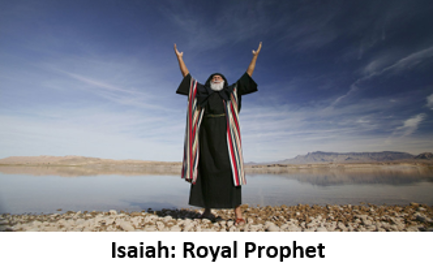
As Jesus does often, he brings to fruition that other Old Testament story that his educated audience would have known well. Isaiah 5 is entitled “The Song of the Vineyard.” Here is the first verse:
(Note: Isaiah is singing and his “friend” is God)…
Now let me sing of my friend,
my beloved’s song about his vineyard.
My friend had a vineyard
on a fertile hillside…
The rest of Isaiah 5 tells a story that parallels today’s, except for an unexpected, insane twist that Jesus adds.
What is the “twist”?
After what happened to the others who were killed, was the Owner out of his mind to send his son? This is the twist to the story. Jesus is telling them what God (the Owner) decided to do and, in fact, His son is standing right in front of them.
Jesus said to them, "Did you never read in the Scriptures: The stone that the builders rejected has become the cornerstone; by the Lord has this been done, and it is wonderful in our eyes? Therefore, I say to you, the kingdom of God will be taken away from you and given to a people that will produce its fruit."
What is Jesus quoting?
Psalm 118:22-23. “The stone the builders rejected has become the cornerstone” is a proverb that captures the folly of mankind: every time they become full of themselves, they become blind and reject God. It is happening again with Jesus. What is insignificant to human beings has become great through divine beneficence.
Jesus is the stone that the builders (the Jewish leaders) reject, but he will be the cornerstone of the new Temple: his Body, the Church.
But when the tenants saw the son, they said to one another, 'This is the heir. Come, let us kill him and acquire his inheritance.' They seized him, threw him out of the vineyard, and killed him.
There is a parallel to Jesus’ death in this statement. What is it?
The parable says they threw the son out of the vineyard and killed him. What happened to Jesus? He had to carry his cross outside the city of Jerusalem to be crucified.
Final message of the parable…
Whether we are referring to the House of Israel, the Church, or the world, it is helpful to remind ourselves that we are not the owners of this vineyard. We are tenants and stewards. We have been put in charge and entrusted with the responsibility of caring for the entire world (including our possessions), but everything that has been given to us is on loan. Thinking that we truly own anything in this world is the first spiritual mistake a human can make. Our purpose is not to replace God as owner but learn how to be like our Father, how to care for His creation, how to love our neighbor and contribute to God’s kingdom. It is in doing this work that we find out who we are and our own unique gifts and purpose, en route to Heaven.

Member Topic: How can we experience the love of God?

How can we experience the love of God? What a beautiful and important question.
Every relationship with God and experience of His love will be as different as there are differences among human beings. I sometimes use the analogy of an infinitely-sided diamond. Although there are as many sides to this diamond as there are humans, the center of the diamond is the One and same God. Each of us has our own distinct face of the diamond but every one of us is connected to the one, immutable God in the center.
Although how we see and experience God will be unique to each of us based on our own particular gifts and circumstances, the God we behold is the same, and therefore there will be many common denominators we share that all point us to God.
One common denominator already present in the very question of our topic – how can we experience the love of God? There is a longing in all of us to experience God's love and this very desire is given to us; it’s kind of like God’s calling card, hoping we will answer His call. This is what John means when he said, “God loved us first” (1 John 4:19).


Love I
For starters, it may be helpful to review the meaning of love.
First, love does not always equate to feeling intense emotion. You may intensely love your spouse, your kids, and/or your parents, but that doesn’t mean you feel warm and fuzzy and super close all of the time. The highest form of love actually begins with wanting what is best for the other. It’s an act of our will more than it is a choice based on feelings. That’s how we can love our enemies – we can pray that God help them (an act of the will; an act of love) – without liking the person.
Similarly, we could say that experiencing God’s love doesn’t always mean feeling intense emotion. Nor the reverse: your expression of love towards God will not always translate into feelings of emotion. An example: when you decide to help someone – especially when it is inconvenient for you – your act is a loving act, but you may not feel that way in the moment.
This points up another common denominator. I once shared an old adage: “Joy works backwards.” When we do good things, it may cost us, it may hurt, it may make us feel behind or down. But the joy of such (sacrificial) giving comes later/after. In fact, working hard on any skill doesn’t pay off until later. Spiritual things also work like that, and God’s love is no exception.
Although I have downplayed the emotional side of God’s love, I should clarify that there are many times when intense emotion is there (I can vouch for it). My point is that although emotions are good and have a place at the table, they don’t define love. A better measure is how good we are at putting others first and how much we are willing to sacrifice for them.
Of course, Jesus set the highest standard for sacrificing oneself for love. I can tell you as I was coming out of my unbelieving years, this was the hardest thing for me to accept. To begin with, I knew I wasn’t a very good person; in fact, if I were God, I would have squashed me like a bug long ago. Fortunately, God is willing to suffer fools for as long as it takes if He thinks there’s a chance. So, as I moved closer to God, I eventually learned that I could trust Him with helping me make better decisions. BUT, for God to come to earth as a human being to die for us? Die for me? That was nuts. Not only did I think we (especially me) were not worth it, I just couldn’t conceive of such an insane depth of love.
As time when on we became closer and he helped me change the way I made decisions, both in business and in my personal life. But accepting what He did for us took a good bit more time. The only thing I was positive of was that He was there.

Love II
At the end of the day, the only explanation for absolutely everything with God is love. When I finally did grasp this “God love” intellectually, I then felt the gap between Him and me was greater than ever. Who could love like that? I felt wholly inadequate and unable to uphold my end of this relationship.
In addressing the problem of understanding how much God loves us and then how to love Him back, perhaps we could learn from the Him. How did God exhibit His love for us?
Let’s ask the question, first to God and then to ourselves.
Us: Lord God, thank you for your time. We are discussing how to experience Your love. We know the highest love involves sacrifice and we want to learn from You. So, our first question is how much are You willing to sacrifice for us?
God: Everything.
Us: Everything, okay. Can you prove that?
God: All right, I’ll try. Even though I am infinite and outside of your finite space and time, what if I set aside my pure God status and became a human on earth. I could show you what love looks like from a human perspective. I can show you perfect goodness, mercy, forgiveness, humility, sacrifice, and how to love one’s neighbors and enemies.
Us: Okay, wow, that would be very helpful. What else?
God: Well, I have a sense that you might not like My version of Me. What if instead most people would prefer to have a strong, warrior-like God-king who will give them all the earthly freedoms they desire and subdue all their neighbors? My version of love would turn their world upside down such that they might decide to put an end to me and hopefully scare off my followers by torturing and crucifying me.
Us: In that case, don’t come. We don’t deserve you.
God: But if I love you and am willing to sacrifice everything for you, shouldn’t I come, anyway? If I don’t, your sins will keep you out of Heaven forever. I don’t want that. I want you with me.
Us: Can’t you just wave a magic wand?
God: I am not only love; I am also perfect justice. All humanity’s hatred, envy, lust, greed, and pride have tipped the scales of justice, oftentimes against innocent people. I have only permitted this temporarily because I granted everyone free will, but I will not allow evil to have the last word. In the end, justice will be repaired. That’s why they call it “Judgment Day” – note the word justice in that.
Us: Well, then, we’re screwed, God. If you don’t come to help us, we’re screwed. If you do come, we will murder you and we’re still screwed.
God: It looks that way, doesn’t it? But what if I decide to come anyway and do what I said I would do – show you what love, mercy, and forgiveness look like. And when they seek my death, I will offer myself to them freely, and I will use my own punishment and death as payment for your sins. Then justice can be satisfied and you can join me in Heaven after this life.
Us: That is crazy.
God: Maybe, but isn’t that what perfect love must do? Would my sacrifice be proof enough of my love for you?
Us: Well, of course it does – it’s over the top. But, God, what’s the catch? There must be some hidden cost in there for us you’re not telling us about.
God: Love me back.
Us: That’s it? But how?

To be continued next month (10/20)… In this session we mostly set the stage and discussed spiritual realities and definitions. Next month, we will attempt to provide specific pathways and more concrete steps.
Closing Prayer
Lord Jesus
We thank you for the blessing of reading your word together.
We ask that these words of life, truth and hope enlighten our minds and strengthen our faith.
May your love and grace follow each of us as we return to our daily lives, refreshed and blessed by you.
We ask all this in your name.
Saint Michael the Archangel, defend us in battle!
Be our protection against the wickedness and snares of the devil.
May God rebuke him, we humbly pray; and do thou, O Prince of the Heavenly Host,
By the power of God, cast into hell Satan and all his evil spirits,
Who travel about the world seeking the ruin of souls.
Amen.


Comments