02.11.25 Anointing the Sick^J Prophets Ezekiel and Jeremiah
- tmaley
- Feb 16, 2025
- 13 min read
Updated: Feb 17, 2025
Opening Prayer:
O God of abundant mercy and love who provide us with more than we can imagined.
Grant all humans freedom of worship and freedom from unnecessary violence around the world.
We especially pray for Christians who are being persecuted and need protection, spiritual courage, and comfort.
And as you taught us to pray together…
Our Father who art in heaven, hallowed be your name.
Your kingdom come, your will be done, on earth as it is in heaven.
Give us this day our daily bread,
And forgive us our trespasses as we forgive those who have trespassed against us.
And lead us not into temptation, but deliver us from evil. Amen!
Upcoming major holy days: Lent begins Ash Wednesday, March 5; Solemnity of St. Joseph, March 19.
TODAY:
The Sacrament of Anointing the Sick
Gospel reading for 6th Sun in Ordinary Time (2/16): Sermon on the Plain, Luke 6:17, 20-26
Bible Timeline: Prophets of the Southern Kingdom of Judah. Tonight, Ezekiel and Jeremiah.
Catholic Facts – When were chapters and verses added to the Bible?
Catholic Archbishop of Canterbury Stephen Langton (1200 AD) was the first to incorporate chapter divisions in the Bible while he was a professor in Paris. (He later gained prominence for his role in orchestrating the composition of the Magna Carta in 1215.)
Chapters were awfully nice to have, but it would still be another 300 years before Christians would agree on the introduction of verses. This happened in 1551, when a printer from Paris named Robert Estienne published a Greek edition of the New Testament which provided the chapter-verse divisions which we still use today. He extended this chapter and verse system to the OT by 1560.
The Sacrament of Anointing of the Sick and Last Rites

The Sacrament of Anointing of the Sick is a special blessing in the Catholic Church for people who are seriously ill or elderly. It is one of the 7 sacraments that Jesus gave to help us in our lives. This sacrament is meant to bring comfort, strength, and healing to those who are suffering. It can be administered individually or in a communal setting.
This sacrament is not just for those who are about to die; it can be received by anyone who is seriously ill or facing major health challenges. The Church encourages people to ask for this sacrament early in their illness, not just at the end of life. It gives them grace and helps them feel supported and connected to God, reminding them that they are not alone in their struggles.
During the sacrament, a priest lays hands on the sick person and anoints them with blessed oil. This oil is a symbol of healing and strength. The priest prays for the sick person, asking God to heal them and give them peace. The prayers focus on the whole person – body, mind, and spirit – helping them to trust God and find courage in their suffering.
Last Rites, sometimes referred to as the "sacrament of the dying," encompasses the final sacraments administered to a person who is nearing death: it includes the Anointing of the Sick, the sacrament of Penance (Confession), and the Eucharist, which is given as “Viaticum” (food for the journey to the next life). The purpose of Last Rites is to prepare the individual for their final passage from this life to the next, ensuring they are spiritually ready to meet God.
The Anointing of the Sick is rooted in the Bible, particularly in the letter of James:
Is anyone among you sick? Let them call the elders of the church to pray over them and anoint them with oil in the name of the Lord. And the prayer offered in faith will make the sick person well; the Lord will raise them up. If they have sinned, they will be forgiven. – James 5:14-16
This sacrament reflects Jesus' own ministry of healing, as He cared for the sick continuously during His time on Earth.
The Sermon on the Plain, Luke 6:12,17,20-26

Context: We now move on to Chapter 6 in Luke where it begins with the “Sermon on the Plain.” The famous
“Sermon on the Mount” is found in Matthew 5-7, but in Luke we read the “Sermon on the Plain.”
Are these two different events or the same? If the same, why are they named differently?
They could be two different events, and they could be the same event. Most theologians think they are two events, but you have your own opinion.
What are the differences?
1. Luke and Matthew are writing to different audiences, so there are going to be differences. For example, Matthew is writing primarily to Jews and so the “Mountain” in Matthew has deep significance in Jewish thought since the Ten Commandments were given on a mountain (Sinai). Therefore, Jesus’s Sermon on the Mount is seen as the New and Improved Ten Commandments. Luke is writing primarily to the Gentiles, so coming down to the plain is metaphorically fitting. That being said, we must recognize that the reference to “plain” is also misleading. Note in the reading that Jesus went up the mountain to pray and came down to a “level place” to preach. He is still in the hills, but at a level area where people can gather. A summit, perhaps.
2. As part of the Sermon on the Mount, Matthew gives us the 8 Beatitudes. Beatitude means to be blessed, or happy. I.e., Blessed are those… or Happy are those who…. In Luke, we instead see 4 Beatitudes and 4 Woes. The “woes” sound painful, though a better word would be judgment (i.e., if you behave badly, you will bring “judgment” upon yourself. We will dig into this further as some will still need explanation (i.e., “Woe to those who laugh…”!).
Luke 6:12,17,19-26
Jesus went up on a mountainside to pray, and he spent the night in prayer to God. (After this, he chooses his Twelve Apostles).
Jesus came down with the Twelve and stood on a stretch of level ground with a great crowd of his disciples and a large number of the people from all Judea and Jerusalem and the coastal region of Tyre and Sidon.

Jews came from Judea/Jerusalem in the south, Galilee in the north, and the gentile trading centers Tyre and Sidon. The red Xs are potential locations for the Sermon.
Everyone in the crowd sought to touch him because power came forth from him and healed them all.
And raising his eyes toward his disciples he said:
Blessed are you who are poor, for the kingdom of God is yours.
Blessed are you who are now hungry, for you will be satisfied.
Blessed are you who are now weeping, for you will laugh.
Blessed are you when people hate you, and when they exclude and insult you, and denounce your name as evil on account of the Son of Man. Rejoice and leap for joy on that day! Behold, your reward will be great in heaven. For their ancestors treated the prophets in the same way.
But woe to you who are rich, for you have received your consolation.
Woe to you who are filled now, for you will be hungry.
Woe to you who laugh now, for you will grieve and weep.
Woe to you when all speak well of you, for their ancestors treated the false prophets in this way.
Exegesis/Interpretation
The first four blessings in Luke are similar to those found in Matthew. The last four woes (judgments) in Luke are directed at those who abuse the poor and perpetuate injustice.
After his sermons, Jesus was asked if he was abolishing the laws of Moses (i.e., the Ten Commandments). Jesus replied:
“Do not think I have come to abolish the Law or the Prophets… I have come to fulfill them!” (Mt 5:17)
To “fulfill” them means to “accomplish their purpose.” How is Jesus’s sermon “accomplishing” the Old Law’s purpose?
The Old Covenant laws (sanctions and blessings) were mostly temporal (temporary = this lifetime).
Paul occasionally uses the terminology of giving the people milk before solid food. What does this mean?
This means that God was teaching them good and evil, love and hate, etc., in earthly/external terms they could better relate to. The Ten Commandments are about creating social order (a good thing), but Jesus’s Beatitudes are all about incorporating what seems like disorder (a negative – poor, etc.), to promotes a higher level of consciousness. With the arrival of Jesus, people are now ready for solid food, meaning interior/spiritual holiness and its eternal consequences.
Now let’s review these woes to try and understand what Jesus is saying.
Woe to you who are rich, for you have received your consolation. Meaning?
Jesus pronounces judgment on the rich who allow poverty to increase without using the blessings of their material wealth to assist the poor and suffering.
Woe to you who are filled now, for you will be hungry. Meaning?
They will be full now, but they will be hungry for eternity.
Woe to you who laugh now, for you will grieve and weep. Meaning?
They may laugh in the face of injustice or the poor now, but they will suffer beyond this earthly existence.
Woe to you when all speak well of you, for their ancestors treated the false prophets in this way. Meaning?
We don’t think of it, but if we fall into this careless, arrogant category, we shouldn’t rely on the agreeable opinions of others who might speak well of us. Jesus says we would be no different than those throughout history who persecuted the prophets.
Note one further comparison:
The blessings (blessed are the poor, the hungry, those weeping, those hated for righteous’ sake) are comforts to those having these experiences.
The woes are warnings directed to all humans who have a hand in these injustices when we have the power to alleviate them. People (perhaps ourselves) need warnings sometimes to get our attention. If the warning is even a little successful, it can change our thinking and our ways, in which case the woes becomes blessings!

Bible Timeline


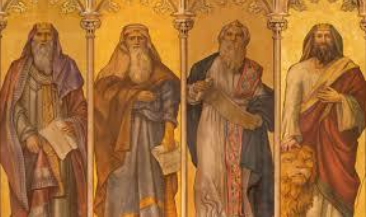
The Prophets
Historically, prophets often say and do strange things—kind of ‘out of the box’ for what is considered normal and acceptable in their society. In Exodus, Miriam rebelled against Pharaoh’s edict and then pulled out a tambourine to lead women in a victory song (Exodus 15). Jonah tried to run away from God’s request and was returned to the path to Nineveh by a big fish. Ezekiel ate a scroll and prophesied over dry bones (Ezekiel 3 and 37). The call of the prophets required these beautifully odd expressions that subvert the normal social order for their message to be heard. Their wisdom frequently came from their experiences living on the margins, and time and time again, they are misunderstood. No doubt God knew they would be misunderstood, but He was never going to stop trying to win back the heart of Israel, for that is how love works. Scripture retains these stories over the ages for our benefit and wisdom!
So far, we have covered Elijah and Elisha (800s BC), who tried to get the attention of the Northern Kingdom soon after they split from the Davidic Kingdom. They quickly fell into apostacy, so Elijah and Elisha were sent to them.
Then last month we discussed Isaiah, the greatest of the prophets, who lived at a critical time in Israel’s history when the very existence of the people was threatened by the king of Assyria in the mid-700s BC. His many prophecies about the coming Messiah were so ‘right on’ that the book of Isaiah is sometimes called the “Fifth Gospel.”
Next up are Ezekiel and Jeremiah.
Ezekiel
Ezekiel was both a priest and a prophet and is known for his vivid visions and symbolic actions. You may also recall two weeks ago we covered Jesus’s Presentation at the Temple. One of the significant facts was that the Jews had been waiting for God to return to the Temple since He left nearly 600 years earlier, before it was destroyed by the Babylonians (~ 600 BC). It is true the Jews returned from captivity 70 years later and eventually built a smaller temple by ~500 BC, but the glory cloud of God did not return. In 435 BC, the Prophet Malachi prophesied the Lord’s return:
“Behold, I send my messenger (John) to prepare the way before me, and the Lord whom you seek will suddenly come to the temple…” – Malachi 3:1
What’s so fascinating is that Ezekiel was present in the Temple when the glory cloud of God departed!
Then the glory of the LORD rose from above the cherubim and stood over the threshold of the temple. The temple was filled with the cloud, and the court was filled with the brightness of the glory of the LORD. The sound of the wings of the cherubim could be heard as far as the outer court, like the voice of God Almighty when He speaks. As I watched, the cherubim lifted their wings and rose up from the ground, with the wheels beside them as they went. And they stopped at the entrance of the east gate of the house of the LORD, with the glory of the God of Israel above them. Then the cherubim, with the wheels beside them, spread their wings, and the glory of the God of Israel was above them.
And a message of the LORD came to me: You are living in a rebellious house. They have eyes to see but do not see, and ears to hear but do not hear… Therefore, pack your belongings for exile…” – Ezekiel 10-17
How bad had the Jewish people become? The LORD told Ezekiel to tell them this:
“Even Samaria did not commit half the sins you did. You have multiplied your abominations beyond theirs, and all the abominations you have committed have made your brothers appear righteous.” – Ezek 16:51
Samaria never had one good king, so that’s a pretty horrifying comparison.
It was in 601 BC that Nebuchadnezzar (the Babylonian king) conquered Jerusalem and deported the royal family, the members of the upper class, the craftsmen, and the priests to Babylon. Ezekiel was deported along with the priests. Thus, Ezekiel became the first prophet to be commissioned outside of Israel.
Ezekiel’s primary role in captivity will be spent convincing his people that this whole disaster was their doing, but he also encourages them and says God will remember his people and restore them to their home if they return to Him.

Another memorable story in Ezekiel 37 is often referred to as the “The Valley of Dry Bones.” Ezekiel had this vision where God brings him to a valley filled with dry/dead bones and asks him if these bones can live. Ezekiel responds, “O Lord God, You alone know!”
God then commands Ezekiel to prophesy to the bones, and as he does, the bones start coming together; then sinews and flesh begin to form upon them; and then they are covered with skin. Soon there is this a massive array of lifeless human bodies lying on the ground. Then God instructs Ezekiel to prophesy to the Spirit, which then enters into them, and they suddenly rise up and there is this vast army of people.
What God is doing for Ezekiel with this unforgettable vision/imagery is showing him the restoration of Israel, offering hope to a people in exile, reminding him/them that God can bring life from death and restore His covenant people.
Conclusion
Ezekiel’s prophecies were crucial in maintaining the faith of the exiled Israelites, emphasizing God’s faithfulness and the promise of restoration. While the exact circumstances of Ezekiel’s death are not detailed in Scripture, it is generally accepted that he died in Babylon. His outspoken defense of God and criticisms of his fellow Jews put him at odds with the prevailing practices and politics of the day and Jewish tradition holds that he suffered persecution and eventually martyrdom.

Jeremiah
The Book of Jeremiah has 52 chapters (not the most) but contains the most words at 33,000. (Ez-27K, Isa-25K)
Jeremiah is the most biographical of the Bible’s prophetic books. There is more known about the life, personality, and inner struggles of Jeremiah than any other prophet in Scripture.
Jeremiah is often called the “weeping prophet” because of his deep emotional connection to the plight of his people. Also, Jeremiah finds very few supporters in Jerusalem, so his lack of “friends” weighed on him as well. He has so much sadness that he also authored of the Book of Lamentations, which follows the book of Jeremiah.
One of the most memorable stories was his call to be a prophet, which occurs in Jeremiah 1 where God tells Jeremiah that “He knew him before he was formed in the womb and appointed him as a prophet to the nations” – Jer 1:5-8.
In response to God, Jeremiah expressed his reluctance, citing his youth and lack of eloquence, but God reassures him, saying, “Do not say, ‘I am only a youth’; for to all to whom I send you, you shall go, and whatever I instruct you, you shall speak. And be not afraid, for I am with you and will deliver you.” This moment highlights God’s sovereignty and the divine purpose behind Jeremiah’s life.
Jeremiah’s lamentations over Jerusalem are also poignant. In Jeremiah 9:1, he expresses his sorrow, wishing that his head were a spring of water so he could weep for his people who were slain. His heartfelt cries reflect the deep anguish he feels about the destruction of Jerusalem and the consequences of the people’s unfaithfulness to God.
Additionally, Jeremiah’s symbolic actions, such as the purchase of a field in Anathoth (Jer 32), serve as a testament to his faith in God’s promise of restoration. Despite the Babylonian siege, Jeremiah buys the field as a sign that the people will one day return to their land, symbolizing hope amidst total despair.
Jeremiah's prophetic ministry lasted 40 years and effectively ended with the final destruction of Jerusalem in 586 BC. After the fall of the city, he was initially left behind in Judah where he continued to prophesy. However, many of the people remaining behind with him feared retribution from the Babylonians and decided to flee to Egypt. Despite his resistance and warnings against this course of action, they took Jeremiah with them (see Jer 43:1-73). This act of disobedience to God's command led them not to safety but to danger and further adverse consequences.
In Egypt, Jeremiah's life took a somber turn (if that were even possible). The people who had fled with him were idolatrous before they left and, in spite of Jeremiah’s condemnations, they continued their idolatrous practices in Egypt. The prophet's presence in Egypt is marked by a sense of despair, so you can see why he is the author of Lamentations and called the “weeping prophet.”
The exact details of Jeremiah’s death are not explicitly recorded in the Scriptures, but Jewish and Catholic tradition hold that he likely died in Egypt, possibly stoned by the very Jews who rejected him.
Closing Prayer:
Jeremiah 9:1-2
Oh, that my head were a spring of water, my eyes a fountain of tears,
That I might weep day and night over the slain from the daughter of my people!
Oh, that I might leave my people and depart from them.
They are all adulterers, a band of traitors.
They ready their tongues like a drawn bow;
with lying, not with truth, and they are powerful in the land.
They go from evil to evil, and me they do not know, says the Lord.
Hail Mary, full of grace, the Lord is with thee.
Blessed are thou among women, and blessed is the fruit of thy womb, Jesus.
Holy Mary, Mother of God,
pray for us sinners now and at the hour of our death. Amen.


Comments